
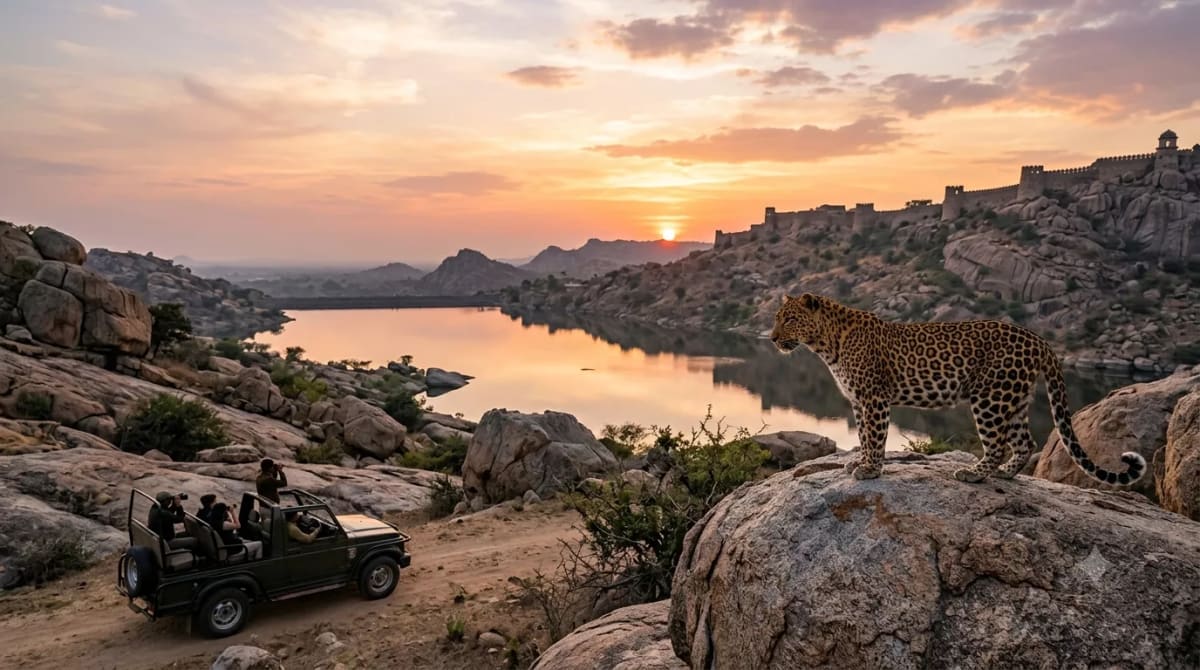
I set off from Indore at 10 PM for a solo group trip, wondering if I had made the wrong booking. When our Trip Captain joined us in Dewas, the introduction round and fun games quickly changed the mood. The next day, we reached Kumbhalgarh, where a delayed hotel check-in turned into an unexpected pool party. Then came a beautiful room with a jacuzzi—a pleasant surprise for a trip that cost around ₹6,000. In the evening, we explored Kumbhalgarh Fort, admired its massive defensive wall, and watched the sunset from Badal Mahal. The night was filled with Rajasthani live music, dancing, games, a chair race that I won, and late-night card sessions. The following day, we visited Ranakpur Jain Temple before heading to Jawai. During the leopard safari, our Gypsy climbed steep, rocky slopes, but we couldn't spot a leopard initially. After enjoying the sunset and a cup of tea near Jawai Dam, our driver alerted us to possible leopard movement. We hurried back into the Gypsy, searched for a while, and finally spotted a leopard walking through the rocky landscape. By the time we started our return journey, the strangers I had met at the beginning had become friends, and none of us wanted the trip to end.
My Jawai Stranger Trip from Indore: Strangers, a Fort, a Jain Temple and One Very Late Leopard
Somewhere between Indore and Dewas, I seriously wondered whether I'd wasted my money.
It was around 10 PM. I was sitting in a vehicle full of people I'd never met, on a trip I'd booked alone, headed for Kumbhalgarh and Jawai in Rajasthan. Some people were chatting among themselves. I wasn't talking to anyone. The thought "maybe this was a mistake" had settled in pretty comfortably.
Two days later I was dreading the ride back, because it meant the trip was ending. This is the story of how that happened: a fort, a Jain temple carved out of marble, a jacuzzi I didn't expect, and a Jawai leopard safari where the leopard made us wait.
Why I booked a stranger trip, and why I almost regretted it
This was my second group trip, but my first one where I'd gone completely solo into the unknown. I'd picked a TravelTech weekend trip covering Kumbhalgarh, Ranakpur and Jawai because the itinerary was exactly what I'd been wanting: a fort, a famous temple and a chance at a leopard, all in one go, without me having to organise any of it.
What I hadn't thought through was the social part. When you travel with friends, the awkward bit is already done. When you travel alone with strangers, you find out at 10 PM, in a moving vehicle, what it feels like to be the only person who doesn't know anyone.
I'm not a naturally loud person in new groups. So I stayed quiet, looked out of the window and quietly went through the "was this a good idea?" checklist.
Dewas: where the mood changed
We reached Dewas, and a guy boarded. He seemed relaxed, and I assumed he was another solo traveller. I even thought, okay, maybe we'll get along.
That didn't last long. He greeted everyone, introduced himself, and announced that he was our Trip Captain.
I was relieved. Honestly, that was the first moment I properly exhaled. Whatever this trip was going to be, someone was in charge of it, and that someone seemed to know what he was doing.
He explained what TravelTech does, and then he started an introduction round. Everyone said their name, where they were from, what they did for work, their hobbies, what they were hoping to get from the trip and their dream destination. Nothing fancy, but it did something important: it turned a vehicle full of silent strangers into a group of people with faces, jobs and opinions about where they wanted to travel next.
The group was more interesting than I'd expected. When my turn came, I introduced myself too, and from there the jokes started flowing.
Then came the games. First a memory game to learn everyone's names. Then an atlas-style game where we named countries. There were more games after that, plenty of laughter, and by the time we all settled down to sleep, I'd stopped thinking about whether I'd made a mistake.
Before we slept, the captain walked us through the itinerary and what to expect.
If you're nervous about joining a stranger trip alone: that first-night icebreaker is worth taking seriously. A trip captain who actively runs introductions and games does a lot of the work for you. You don't have to be the one who breaks the silence.
Kumbhalgarh and the pool party nobody planned for
We reached Kumbhalgarh the next morning and stopped at a restaurant to freshen up, brush our teeth and have breakfast. Then we headed to our hotel.
There was one problem. It was the long weekend around 2 October, and check-in was delayed.
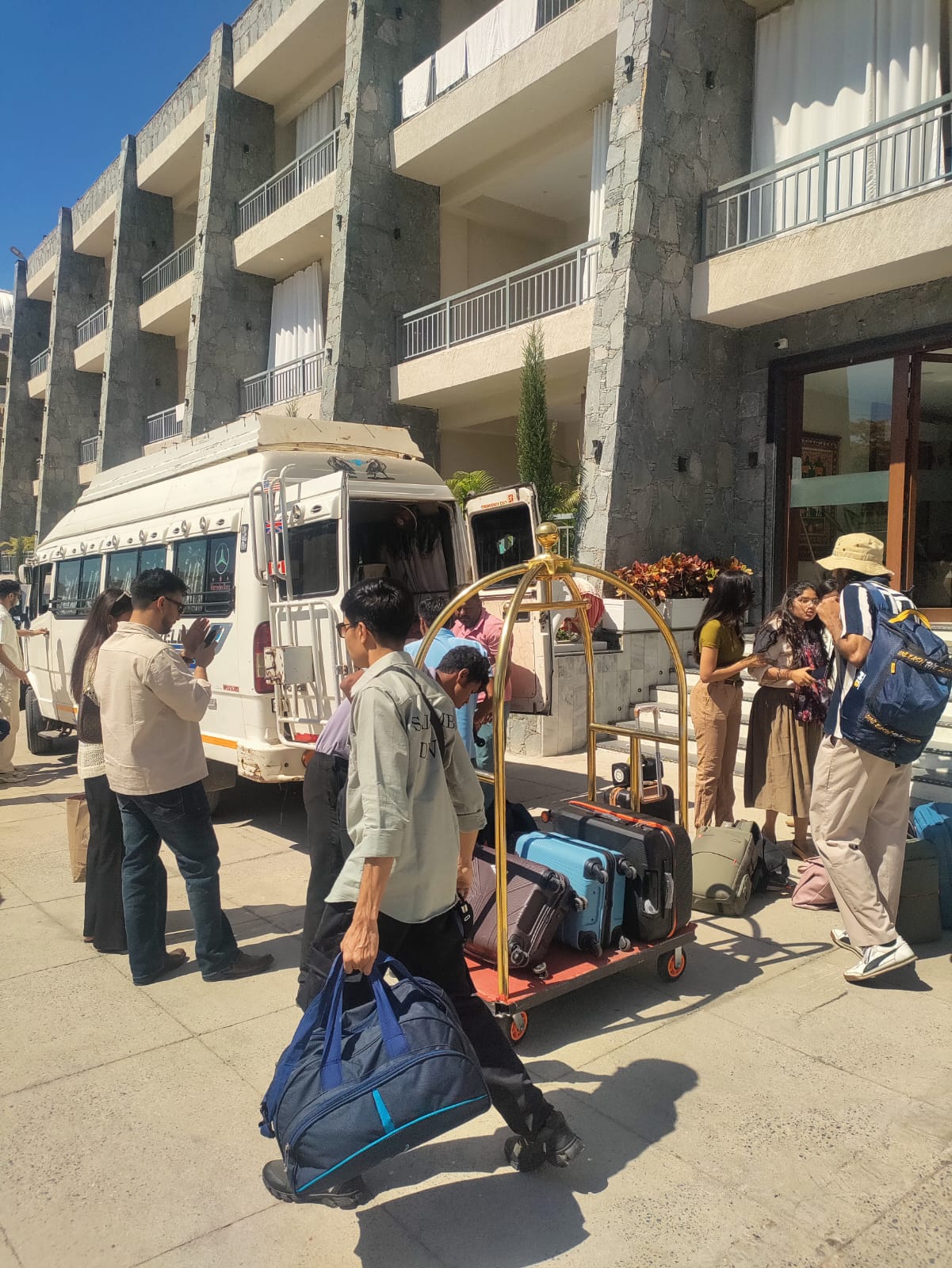
Waiting around in a lobby is the usual way this goes. Our Trip Captain had a different idea: he announced a pool party.
The hotel was beautiful and the pool was even better. There were changing rooms, so we changed quickly, jumped in, put some music on and had a great time. It's strange how quickly a swimming pool can turn a group of strangers into a group of friends. By the end of it, we were just people splashing around and laughing.
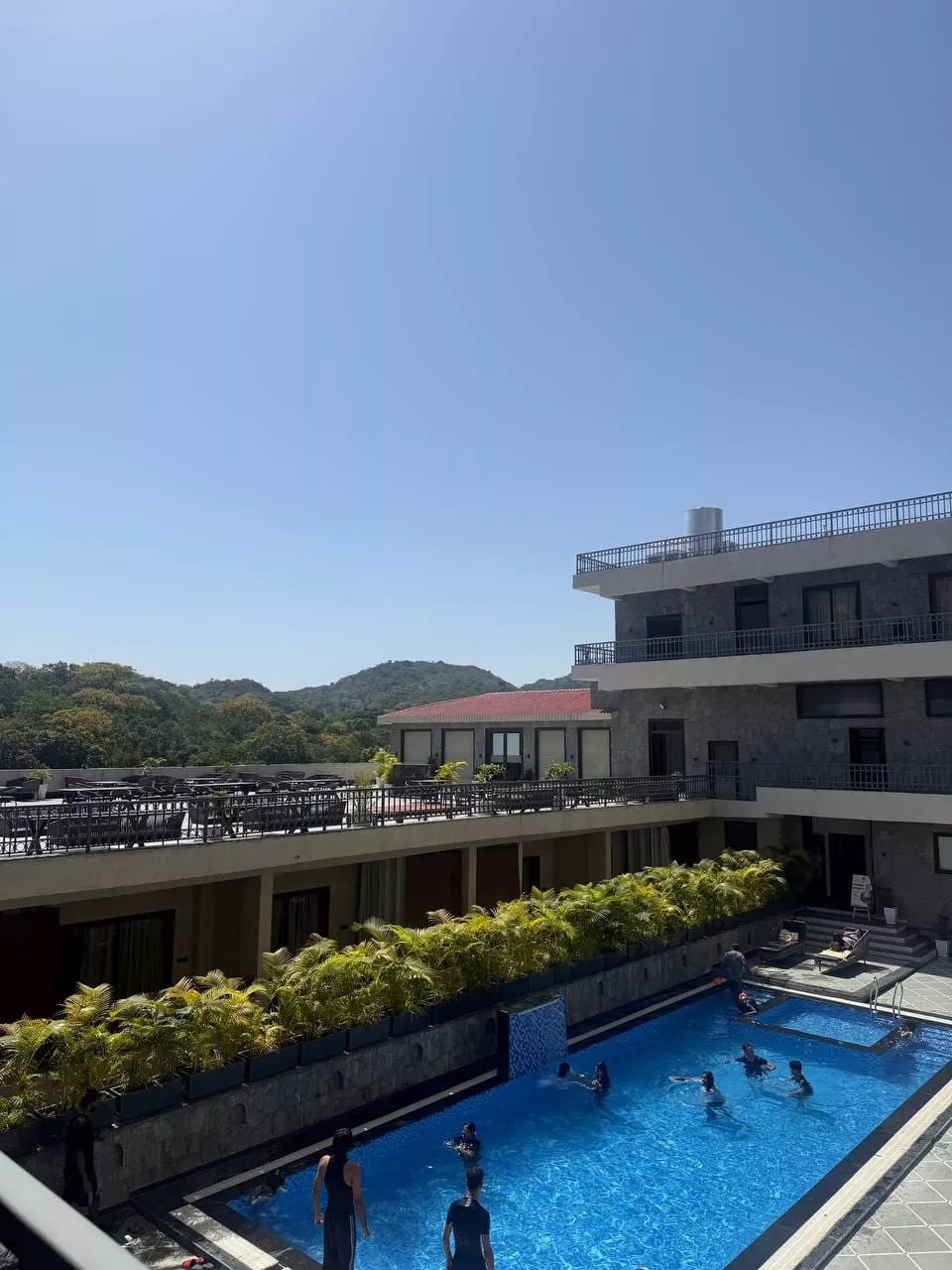
Once the rooms were sorted, the captain gave everyone time to rest. The plan was to leave for Kumbhalgarh Fort around 4 PM, since the fort closes in the evening.
A practical note: during long weekends and festival periods, hotel check-in times can slip because of high occupancy. It's worth keeping your first few hours flexible rather than planning something tight right after arrival.
The jacuzzi room I wasn't ready for
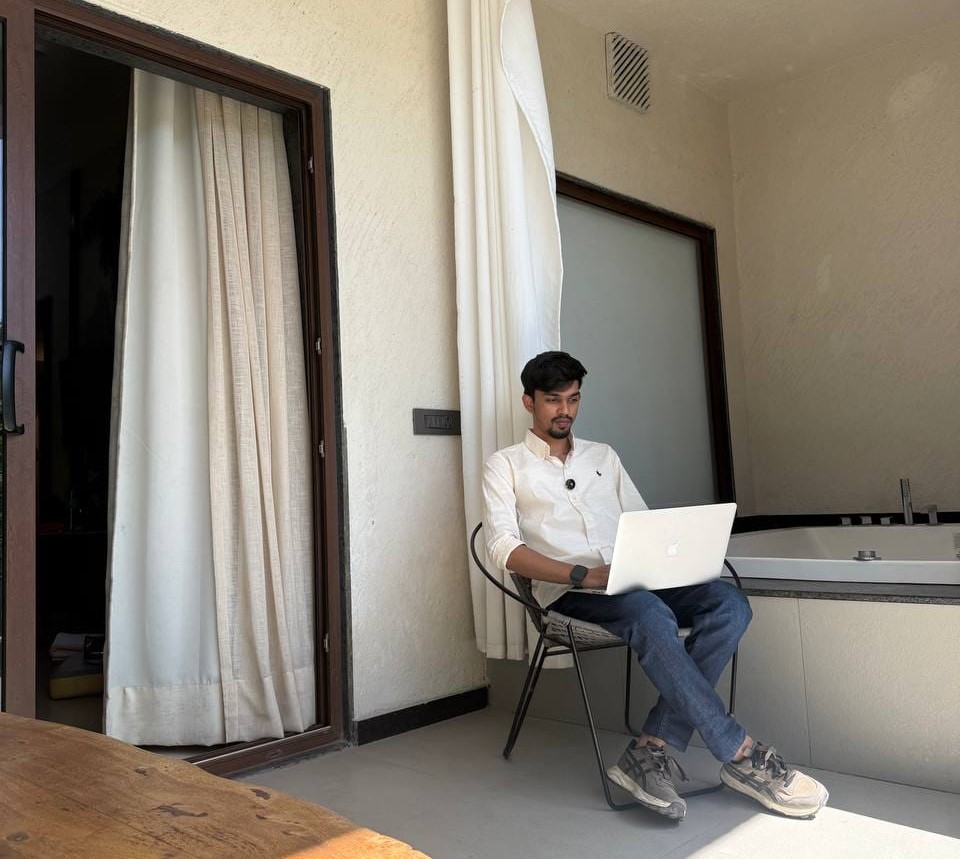
I'll be honest: when I opened the door to my room, I genuinely couldn't believe it.
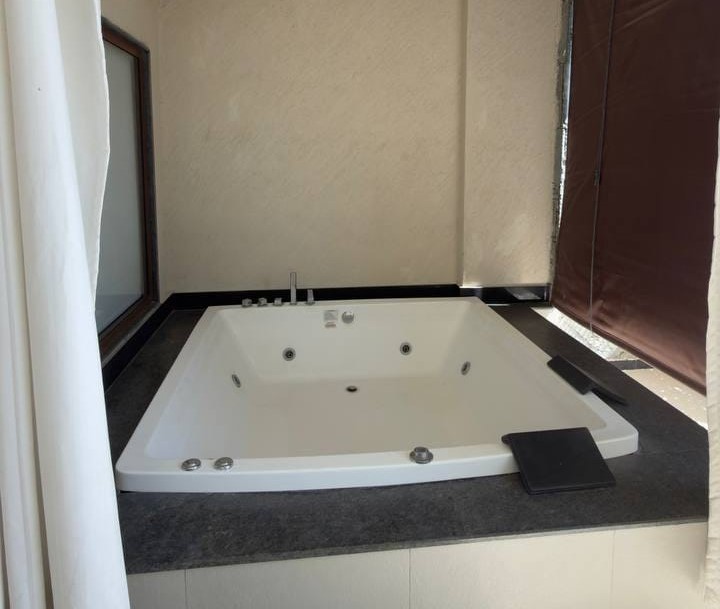
It was a beautiful room, and it had a jacuzzi. This was only my second group trip, so I didn't have much to compare it with, but I remember thinking, this is not what I expected for this price.
I paid approximately ₹6,000 for the trip. I didn't check what the room would cost if booked on its own, so I can't tell you what the saving was. I can only tell you how it felt: I was surprised, in a good way, and I lost track of time in that jacuzzi.
(To be clear, this is just my experience. Rooms are allotted by the trip organiser and I can't promise what any future traveller will get.)
Eventually I got hungry. I looked at the hotel's menu, and the prices looked steep, so I started thinking about ordering something from outside instead.
Then we went for the scheduled tea break, and refreshments had already been arranged: tea, coffee, sandwiches, biscuits and a few other things. I hadn't expected that either.
Small thing, but it stuck with me. It made me feel the trip had been thought through, and that I wasn't going to be left to figure things out on my own. That feeling continued for the rest of the weekend.
Kumbhalgarh Fort: a very long wall and a very tired climb
After the tea break, we left for Kumbhalgarh Fort. On the way, we kept joking and talking. By now I wasn't "the solo guy" in the group anymore; I was just one more person in the banter.
At the entrance, we bought tickets. I remember paying roughly ₹40 per person, though that's just my memory of the visit, so please check the current price before you go.
We'd been thinking of carrying a speaker inside, but speakers weren't allowed, so I had to leave mine at the gate.
A bit of history before I describe the view
Kumbhalgarh sits in the Aravalli hills in Rajasthan's Rajsamand district. It was built in the 15th century under Rana Kumbha, the Sisodia ruler of Mewar, and the name itself comes from his: Kumbhal + garh, or "Kumbha's fort". It's one of the six forts that make up the UNESCO World Heritage listing "Hill Forts of Rajasthan", inscribed in 2013 along with Chittorgarh, Ranthambore, Gagron, Amer and Jaisalmer.
UNESCO notes that Kumbhalgarh was built in a single, planned effort, and that apart from a later palace added by Fateh Singh, it has kept its architectural unity. The fort also has a great deal of water-harvesting infrastructure, which makes sense for a place that depended on holding out through sieges.
The thing everybody talks about is the wall. It's commonly described as the second-longest continuous wall in the world after the Great Wall of China, and you'll often see a length of around 36 km quoted (figures vary a bit between sources). You don't need numbers to understand it when you're standing there. The wall just keeps going across the hills.
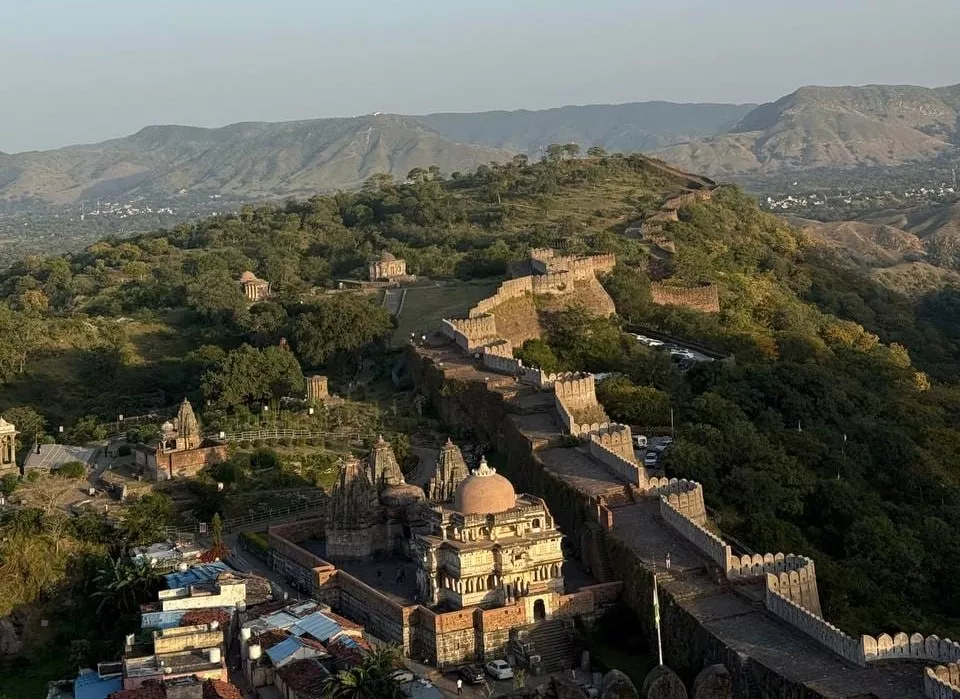
I was amazed by the sheer scale of the fort and the landscape around it. We explored for a while, saw some of the temples and read the information boards. Kumbhalgarh contains a good number of Hindu and Jain temples; the Neelkanth Mahadev Temple, dedicated to Shiva, is among the best known, and the Vedi Temple is another significant one. I'm mentioning these as general background, because I wouldn't want to claim I stepped inside each one.
Climbing to Badal Mahal at sunset
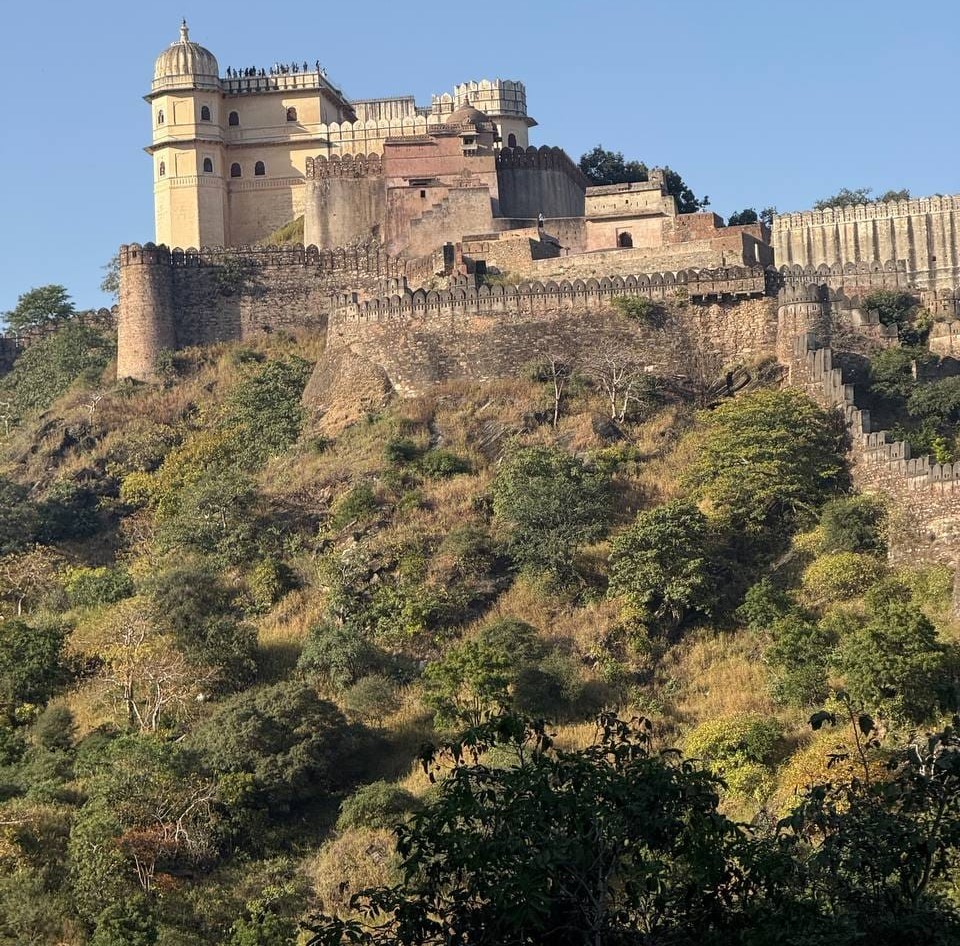
Then we started climbing toward Badal Mahal, the "Palace of Clouds". It was crowded, and the climb was tiring. I'll say it plainly: it was tiring.
It was worth it. Badal Mahal sits at the highest point of the fort, and the sunset view from there made every step worth it. A small piece of trivia I found while researching: although the fort dates to Rana Kumbha's time, Badal Mahal itself is a much later addition, built under Maharana Fateh Singh in the late 19th to early 20th century.
We stayed up there watching the landscape until security asked everyone to head down, as staying past the permitted visiting hours isn't allowed. Reluctantly, we descended and returned to the hotel.
Before you visit Kumbhalgarh: wear comfortable shoes, carry water, and plan your timing so you can reach the top before closing. Sources commonly list the fort's hours as roughly 9 AM to 6 PM, but timings and ticket prices get revised, so check ahead. Don't plan on carrying a speaker in.
Rajasthani music, dinner and a chair race I'm still proud of
Dinner at the hotel was delicious. There was also a live Rajasthani music performance, and our group enjoyed it so much that guests from other groups came over and joined in. Before long, we were all dancing together: our group, strangers from other groups, everyone.
The hotel staff also organised a chair race. I won it. I'm mentioning that here because I'm not letting it go.
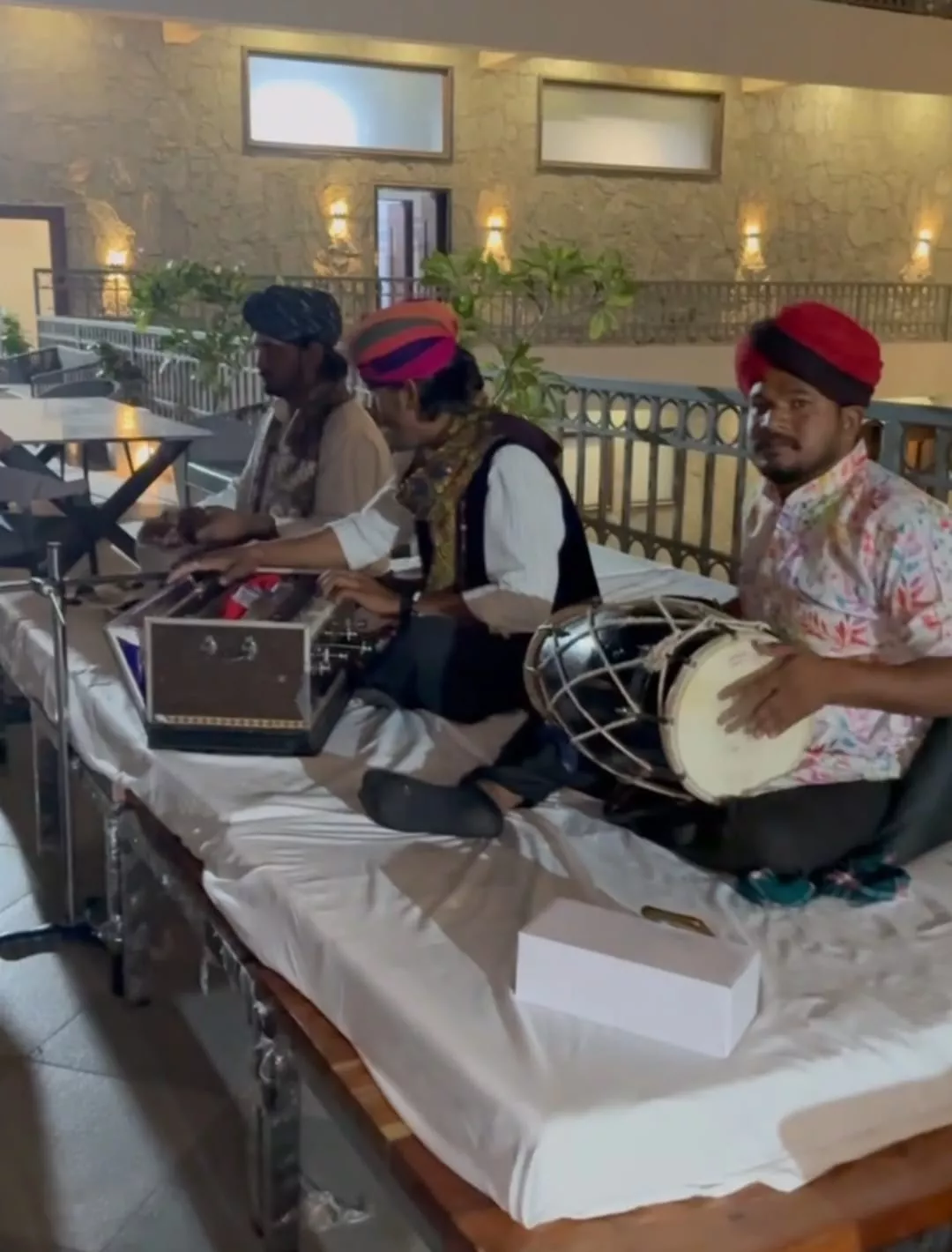
Group dance in Hotel
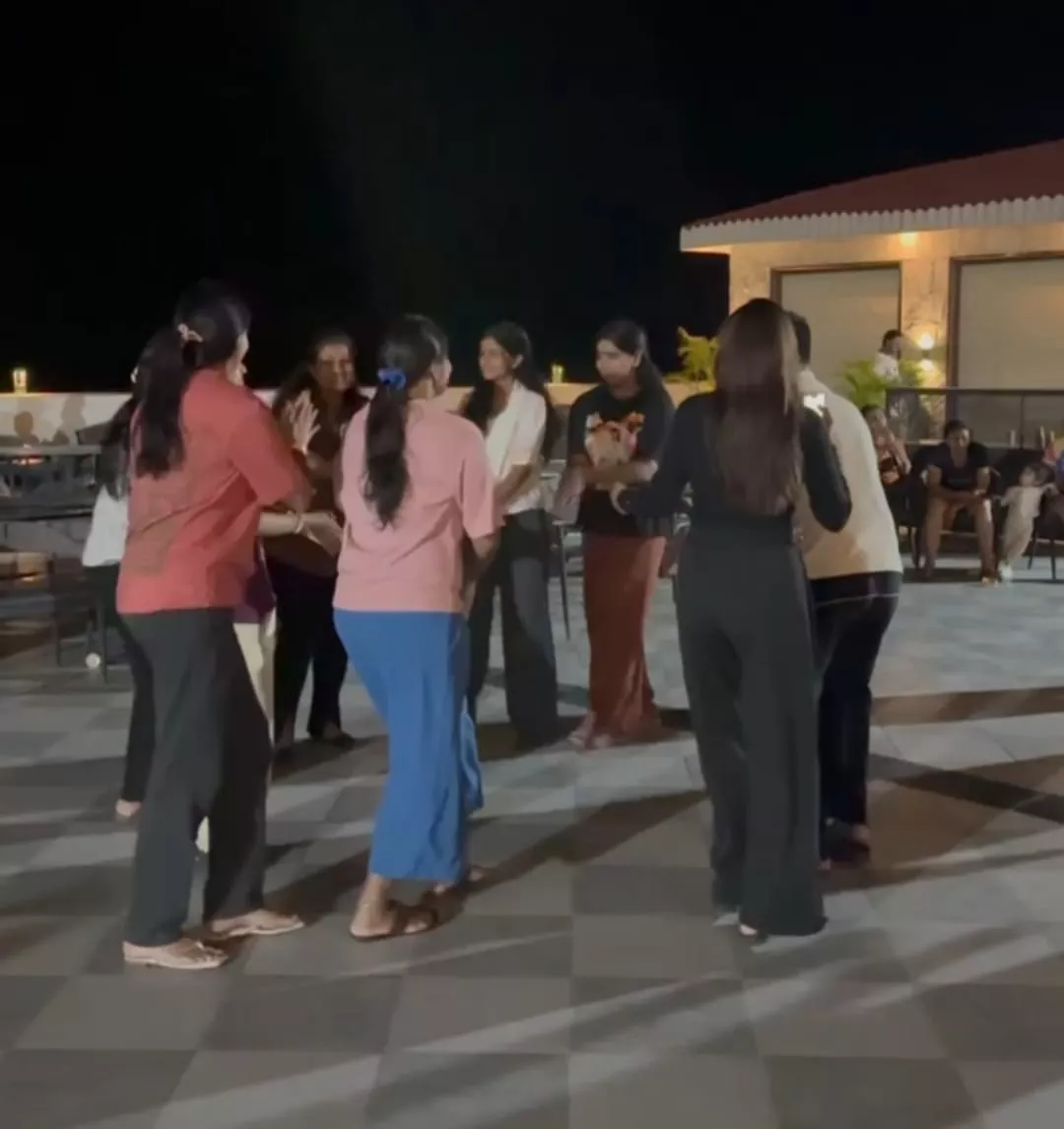
The hotel's activities eventually wound down, but our Trip Captain wasn't done with us yet. He called everyone together for more games. We sat in a circle, played a few rounds, listened to soft music and eventually ended up playing cards. It got late, really late, before everyone finally went back to their rooms.
That was our first day. The captain announced the departure time for Jawai the next morning before we split up.
The breakfast lesson (a warning about kachori)
The next morning, we woke up, got the breakfast call, ate and got ready for the next leg. The breakfast had a good variety.
I'm going to give you one piece of advice, and it's the most practical thing in this entire article: do not be late for breakfast on a group trip.
I was late. I missed the kachori, which I really like, and I regretted it for longer than I'd like to admit. Eat on time, or somebody else gets your kachori.
Ranakpur Jain Temple on the way to Jawai
We left for Jawai with a stop planned at Ranakpur Jain Temple along the way. During the drive, we played another game, this one with a local, desi vibe, and it was funny enough to keep the whole group entertained.
What Ranakpur is
Ranakpur is a village in the Pali district of Rajasthan, in a valley on the western side of the Aravalli hills, between Udaipur and Jodhpur. It's home to the Ranakpur Jain Temple, also called the Chaturmukha Dharana Vihara or the Adinatha Temple, and it's one of the most important pilgrimage sites in Jainism.
The main temple is dedicated to Adinatha, also known as Rishabhanatha, the first Tirthankara. The name Chaturmukha refers to its four-faced design, with the main image facing all four directions.
The story behind it
Tradition says the temple was inspired by a dream. A Jain merchant named Dharna Shah, who was also a minister in the court of Rana Kumbha of Mewar, is said to have dreamt of a celestial vehicle (a nalini-gulma vimana) and wanted to build a temple in that form. Rana Kumbha gave land for the temple, and the township took the name Ranakpur in the ruler's honour.
The exact dating is debated. Many sources place construction in the 15th century, and an inscription on a pillar near the main shrine is dated 1439, naming Dharna Shah as the builder and Depaka as the architect.
Interestingly, it's the same Rana Kumbha who built Kumbhalgarh. So the fort we'd climbed the evening before and the temple we were about to visit are linked by the same ruler. It makes the route feel more connected than it seems on a map.
The architecture
Ranakpur is built almost entirely in white marble, with elaborately carved pillars, domes and ceilings. Popular accounts mention more than a thousand pillars, with the figure 1,444 often repeated, and say no two pillars are alike. I'd treat the exact count as traditional rather than something I counted myself.
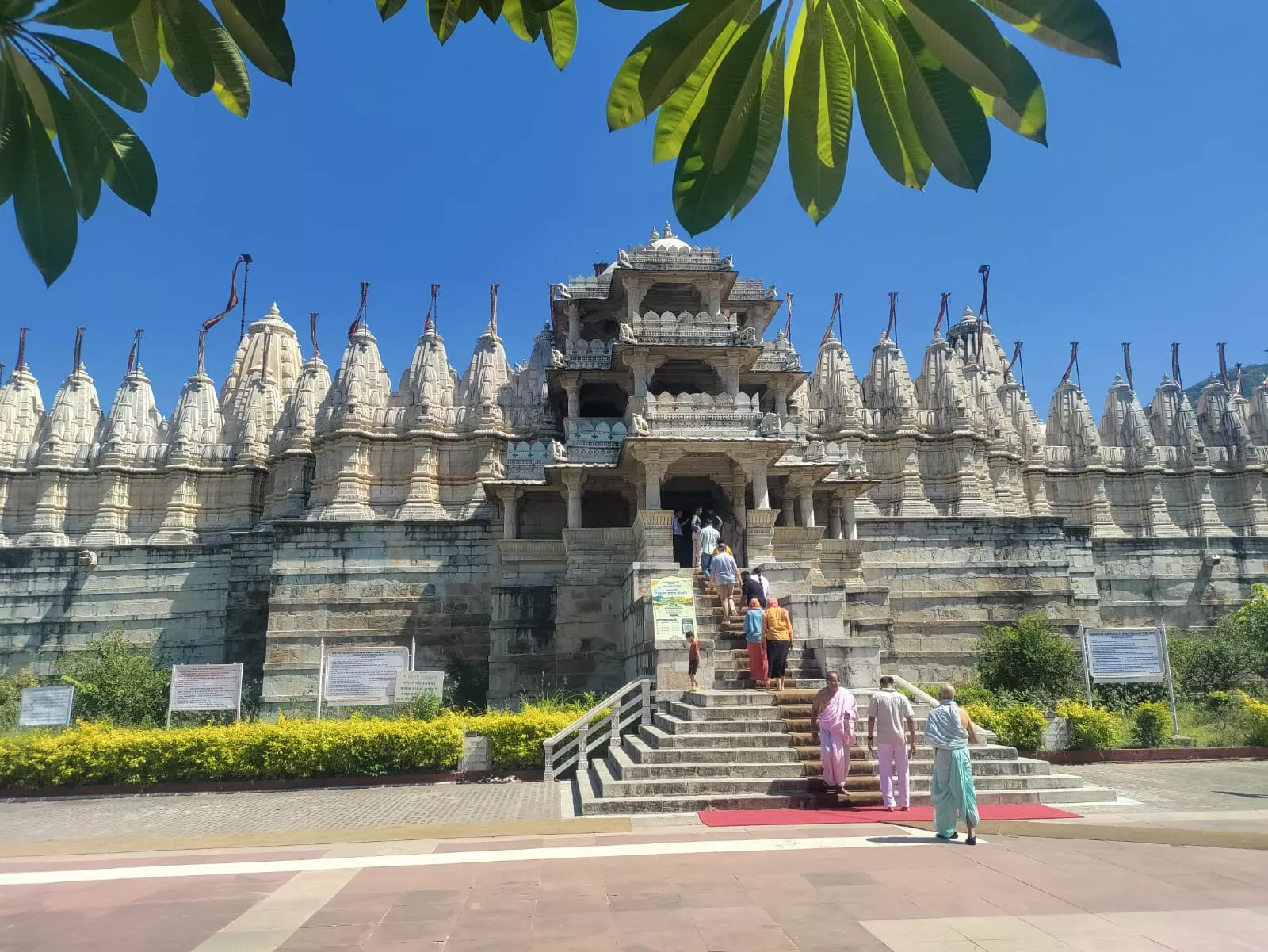
If you plan to visit Ranakpur: it's an active place of worship, so dress modestly, expect to remove footwear, and be prepared to follow the temple's rules on items you can carry in and on photography. Non-Jain visitor hours are often listed as starting around midday, but timings, fees and photography rules change, so confirm them locally.
After Ranakpur, we continued toward Jawai.
Lunch, nerves and three Gypsies
Our safari was scheduled for around 4 PM, and we reached Jawai at about 3 PM, which left enough time for lunch. We ate, and the excitement in the group was hard to miss. Everyone was talking about leopards.
There were three Gypsy vehicles for our group. We split up and climbed in.
The Jawai safari: steep, rocky and not what I expected
Where Jawai is
Quick context: Jawai is in Rajasthan's Pali district, in the Aravalli hills, roughly between Udaipur and Jodhpur. The landscape is unlike the dense forests you might picture for a wildlife trip: it's granite hills, boulders, scrub and caves, with the Jawai Dam and farmland nearby. The area is known for its leopards, which live among the rocky hills, and for the pastoral communities, notably the Rabari, who live alongside them.
One thing worth clarifying, because it's easy to get wrong: Jawai is described as a leopard conservation reserve, not a national park or tiger reserve, and it has a different feel from fenced, tightly regulated parks. As far as I could verify, official population figures aren't published, and the numbers you'll see online are estimates.
The drive
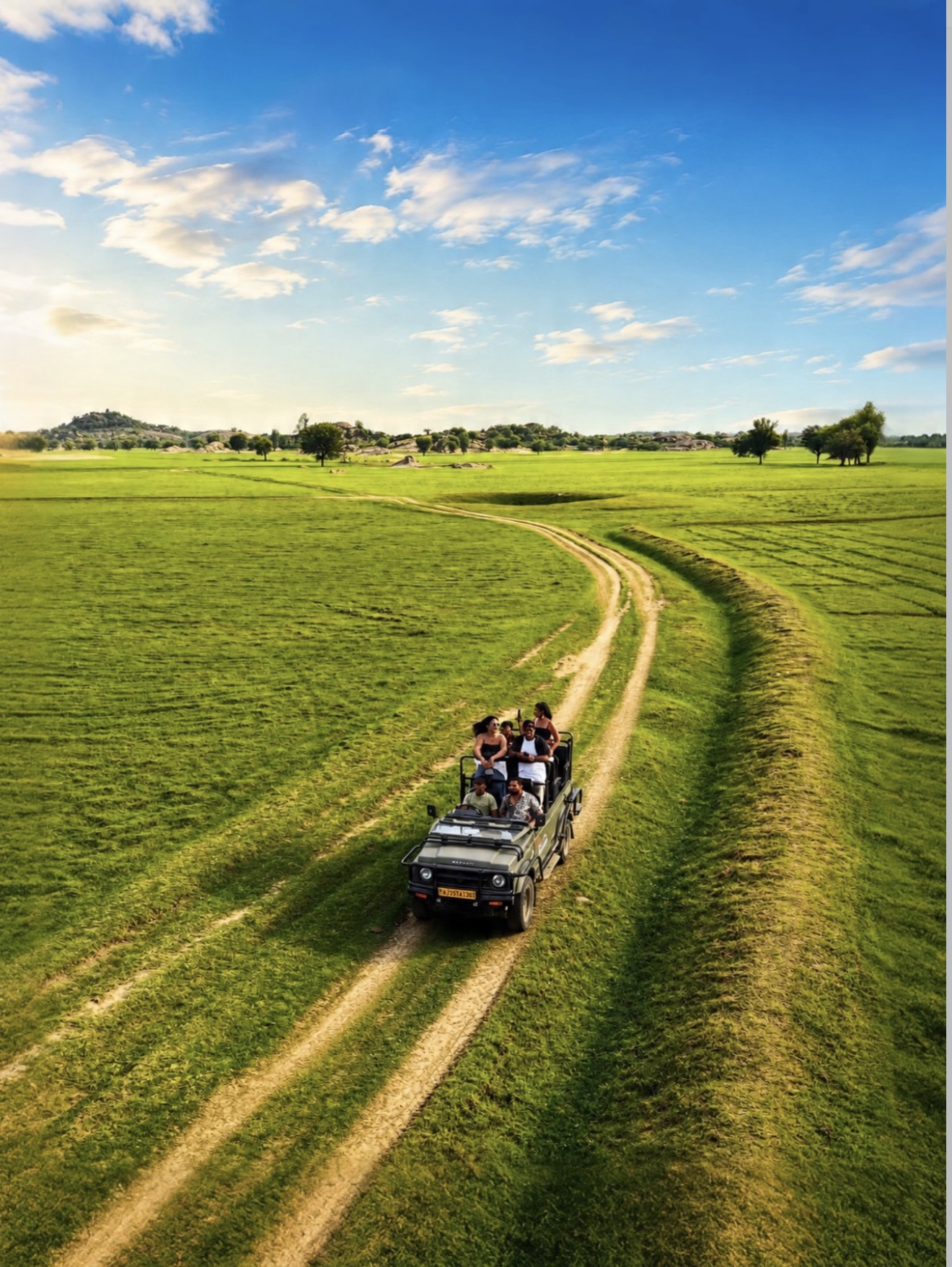
Our safari began, and honestly, the drive itself was thrilling.
The first animal we spotted was a buffalo. Not a leopard, but it was a start.
Then came the moment I still remember clearly. Our Gypsy driver took us up a steep rocky slope. From where I was sitting, it looked impossibly steep, almost like we were driving at a 70–75-degree angle. (I'm describing how it felt from inside the vehicle, not measuring it.) I had never been on a safari like that before. I was nervous and excited at the same time.
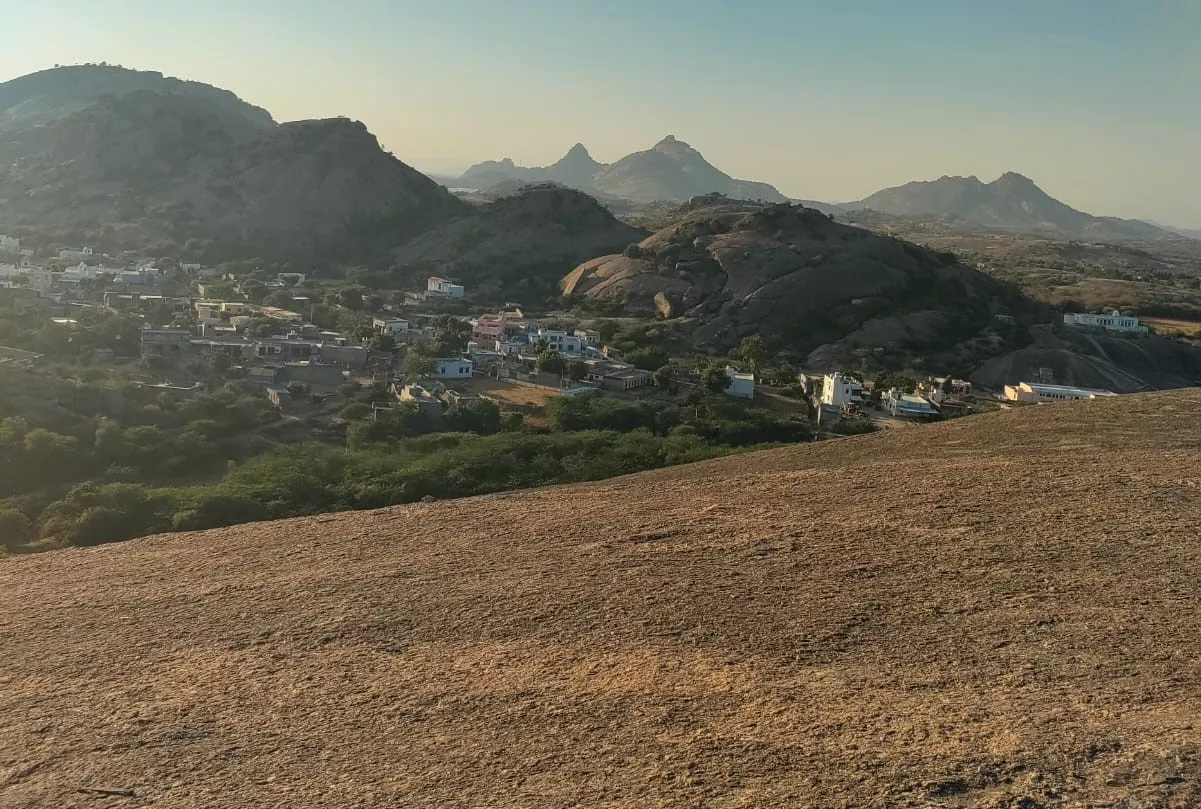
We explored the rocky hills looking for leopards, but we couldn't find one on that first search. The group slowly went quiet, and you could feel the disappointment. People had been so excited at lunch, and now the hills were giving us nothing.
As the sun started to go down, we headed toward Jawai Dam.
Jawai Dam at sunset: the part I'd go back for
This was one of the most memorable parts of the whole trip.
Jawai Dam, the rocky landscape around it, the water, the sunset and a cup of tea made for an incredible combination. Almost every angle looked like a good photo. We spent time talking, taking pictures and enjoying the scenery, and, for a little while, we weren't thinking about the leopard at all.
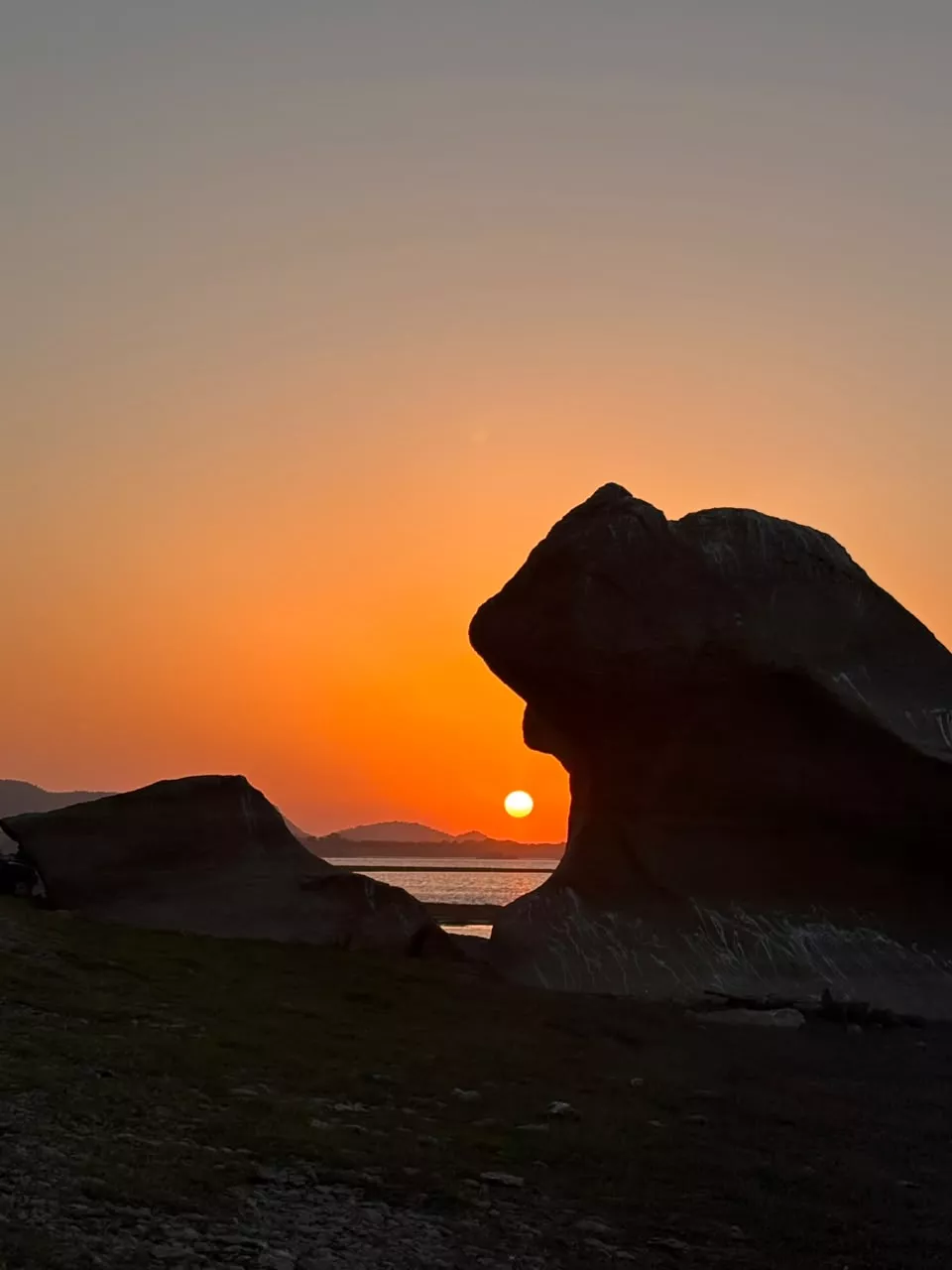
This is when I understood why people compare Jawai to Africa's Maasai Mara in wildlife-travel conversations. The landscapes and ecosystems are very different, so I wouldn't call it a literal comparison, but I understood the feeling it was pointing at: wide open land, a sense that wildlife could appear at any moment, a quiet that makes you pay attention.
I genuinely believe Jawai is worth experiencing at least once. The landscape and the atmosphere made the visit special even before we'd spotted a leopard. And it helped that we were there as a group, with people to share the moment, a captain handling the logistics and a driver who knew the terrain. It's not that you can't do Jawai independently, but having that support meant we could just be present.
The leopard, finally
While we were standing there enjoying the dam, our Gypsy driver suddenly called out. There were signs of leopard movement, he said, and we should hurry.
Everyone ran back to the vehicles.
We searched for a while. Then, in one spot, we noticed some movement, and after looking carefully, we found it: a leopard.
A little later, the leopard stood up and started walking.
I can't describe our reaction as anything other than pure excitement. After all that disappointment earlier, everyone was thrilled. It's a very particular kind of happiness when you've been told you probably won't see something, and then you do.
A fair expectation about leopard safaris: I was lucky to see a leopard, but sightings aren't guaranteed. They depend on animal movement, conditions and plain luck, and no honest operator or traveller can promise one. We had a long stretch of nothing before we got ours. Go for the landscape, the drive and the experience, and treat any sighting as a bonus. Please also follow the guide's instructions and keep your distance from wildlife.
Heading back to Indore
After the safari, we boarded the traveller and began our journey back to Indore. We stopped for dinner on the way.
By then, the people who'd been strangers when we left Indore were friends. We'd shared jokes, games, meals, sightseeing and a few very good moments. Nobody really wanted the trip to end. We talked about travelling together again, maybe to another destination, and when we finally said goodbye, it was with heavy hearts.
What travelling with strangers taught me
I started this trip convinced I'd made a mistake. I ended it not wanting to go home.
I don't think there's a secret formula. A trip captain who made introductions easy, a few silly games, a pool party that came out of nowhere, a late-night card session, a leopard that made us wait: none of it was complicated. But shared experiences do something that a polite conversation can't. When you've laughed together late at night, climbed the same hill, bounced through the same steep rocky drive and got excited over the same leopard, you stop being strangers surprisingly fast.
If you're thinking about a stranger trip and the only thing holding you back is "what if I don't know anyone?", my honest answer is that nobody knows anyone at the start. That's the point. I'd do it again, and I'd happily go back to Jawai.
Planning a similar Jawai trip: what to know
What I can confirm from my own trip:
Route: Indore → Dewas (captain joined) → Kumbhalgarh → Ranakpur → Jawai → Indore.
Departure from Indore around 10 PM.
I paid approximately ₹6,000 for the trip.
During the trip we had hotel rooms, a tea/refreshment break, dinner at the hotel and Gypsy safari vehicles for our group. I can't vouch for the formal package inclusions.
What I can't confirm, so please check before booking:
Exact trip dates and total duration, hotel name and room category, safari operator, and the package's inclusions, exclusions and cancellation terms.
Current ticket prices, timings and photography rules at Kumbhalgarh and Ranakpur.
General tips (not specific to my package):
Ask what's included: stay, meals, transport, safari, entry fees.
Confirm hotel and room arrangements, and check how rooms are allotted.
Ask about the cancellation and refund policy.
Be on time for group breakfasts and departures.
Respect local rules at the fort, the temple and the safari.
Treat leopard sightings as luck, not a promise.
🚗 How to Reach
By Road
Route: Indore → Dewas (captain joined) → Kumbhalgarh → Ranakpur → Jawai → Indore.
✈️ Related Trips from TravelTech
728 × 90 — Leaderboard
❓ Frequently Asked Questions
Is Jawai worth visiting for a leopard safari?
Can you spot a leopard in Jawai on your first safari?
What makes Jawai different from other wildlife destinations?
Can you combine Kumbhalgarh Fort, Ranakpur Jain Temple and Jawai in one trip?
Is a stranger group trip suitable for solo travellers?
What should you know before visiting Kumbhalgarh Fort?
What should you check before booking a Jawai group trip?
📚 Related Guides
More Travel Stories
Group Trips from Indore: Where Can You Travel With TravelTech?
Explore group trips from Indore with TravelTech. Visit Udaipur, Pachmarhi, Goa, Kashmir, Manali, Ladakh and Spiti with organised group travel.
Himachal Pradesh Travel Guide: How to Choose the Right Region for Your Trip.
Plan your Himachal Pradesh trip in 2026: compare regions, check the best time, routes and approximate costs, and see sample trips from Shimla to Spiti.
20 Pocket-Friendly Countries to Visit from India in 2026
20 cheapest countries to visit from India in 2026: visa rules, daily costs, best places to see and TravelTech packages for each one.