

Rishikesh in winter: weather from December to February, Ganga aarti, yoga, Kunjapuri sunrise, rafting, camping, what to pack and how to plan your trip.
Quick answer: Yes, Rishikesh in winter is worth it. From December to February, days are sunny and pleasant while nights get cold, crowds are smaller, and the Ganga runs clear and calm. You can still do the Ganga aarti, yoga, cafes, sunrise at Kunjapuri, hikes to waterfalls and, on many days, river rafting on shorter stretches. Pack warm layers for mornings and nights.
Most people think of Rishikesh as a summer destination for rafting and camping, but winter has a quiet charm of its own. The river turns a clear green, mist hangs over the hills in the morning, and the town slows down. It is the season for long walks along the ghats, slow mornings with a cup of chai in the sun, yoga in cool air and sunsets that come early and turn the hills gold.
This guide covers the weather, things to do, what is open, what to pack and how to plan a winter trip to Rishikesh.
Rishikesh in winter at a glance
Detail | What to expect |
|---|---|
Months | December to February |
Days | Mild and sunny |
Nights and mornings | Cold, often in single digits Celsius |
Crowds | Lower, except around Christmas and New Year |
Rafting | Usually available on shorter stretches; water is cold |
Best for | Yoga, aarti, cafes, short hikes, slow travel |
Weather in Rishikesh in winter
Rishikesh sits in the foothills, so it does not get snow, but winter nights are cold. Days are usually bright and comfortable, ideal for walking and sightseeing. Mornings can be foggy, especially in late December and January, and temperatures drop quickly after sunset. Rooms in budget stays may not have heating, so check before you book or carry warm sleepwear.
Things to do in Rishikesh in winter
Ganga aarti
The evening aarti at Triveni Ghat and at Parmarth Niketan is the highlight of any visit. In winter it starts earlier because the sun sets early, so reach the ghat in good time to find a spot.
Yoga and meditation
Rishikesh is often called the yoga capital of the world, and winter is a calm time to join a drop-in class or a short course at one of the many ashrams and schools. Check reviews and credentials before you commit to a longer programme.
Sunrise at Kunjapuri
Kunjapuri Devi temple, a drive up into the hills, offers sunrise views over the Himalaya on clear winter mornings. Leave very early and carry a warm jacket, as it is much colder at the top.
The Beatles Ashram
The ruins of Maharishi Mahesh Yogi's ashram, where the Beatles stayed in 1968, are now known for their murals and meditation domes in the forest. It is a peaceful walk on a winter afternoon.
Waterfalls and short hikes
Neer Garh waterfall is a short hike from the Tapovan side, and the forest trails around Rishikesh are pleasant in cool weather. Water levels are lower in winter, but the walks are comfortable.
River rafting
Rafting on the Ganga generally runs from autumn to early summer and pauses in the monsoon. In winter, operators usually offer shorter stretches, and the water is cold, so wear the wetsuits and gear provided. Always book with a licensed operator and follow the guide's safety briefing.
Camping and bonfires
Riverside and forest camps around Shivpuri are popular in winter, with bonfires and clear night skies. Check that your camp has proper bedding and warm tents.
Cafes and the old town
Rishikesh's cafes, with views over the river, are perfect for long winter afternoons. Walk across Ram Jhula, explore the market lanes, and try local food and fresh juices.
Add Chopta or Tungnath
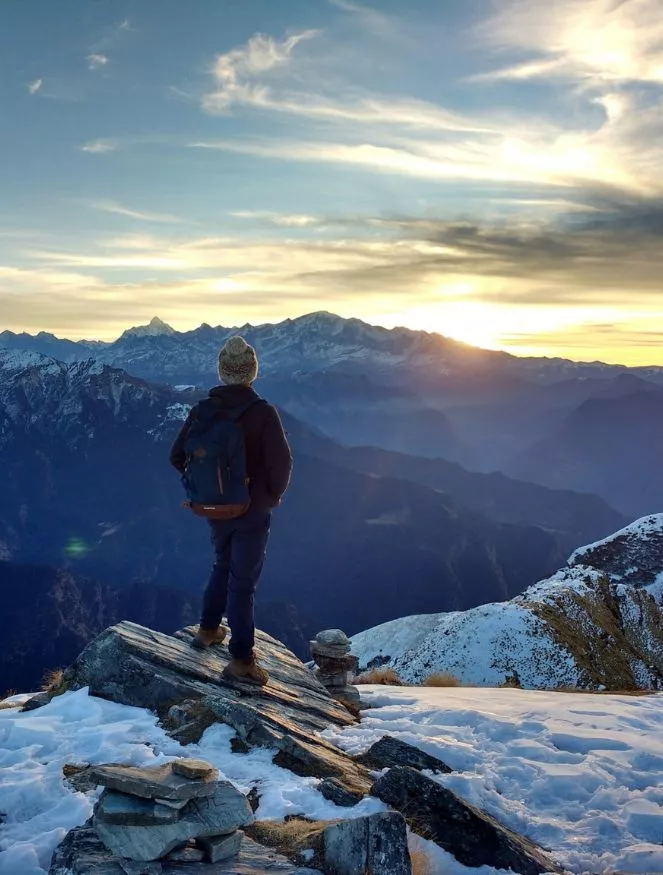
If you have a few extra days, combine Rishikesh with a winter trek to Chopta and Tungnath in the Garhwal Himalaya. In winter, snow often covers the higher trail, which makes it beautiful but more demanding, and access can depend on conditions. Going with an experienced group is the safest way.
Sample three-day plan for Rishikesh in winter
Day 1: Arrive and settle in. Reach Rishikesh by afternoon, check in and walk along the river towards Ram Jhula while the sun is still warm. Spend some time in the market lanes, then head to Parmarth Niketan or Triveni Ghat for the evening aarti. End the day with dinner at a riverside cafe and an early night, because mornings in Rishikesh in winter are cold.
Day 2: Sunrise, yoga and the river. If the sky is clear, leave before dawn for Kunjapuri to watch the sunrise over the Himalaya. Return for breakfast and a mid-morning yoga class. After lunch, go rafting on a short stretch, or walk to the Beatles Ashram and spend the afternoon among its murals. In the evening, enjoy a bonfire at your camp or a slow meal in town.
Day 3: Waterfalls and departure. Hike to Neer Garh waterfall in the late morning, when the trail has warmed up. Grab a final coffee with a river view, pick up souvenirs, and head out in the afternoon so you are not driving in the evening fog.
Rishikesh in winter for different travellers
For couples: Quiet riverside cafes, misty mornings and early sunsets make Rishikesh in winter a calm, romantic break. Choose a stay with a river view and heating.
For families: The aarti, short walks and gentle sightseeing suit all ages. Skip rafting for young children and keep evenings indoors when it gets cold.
For friends: Camping, bonfires, rafting and a winter trek to Chopta make an adventurous group trip.
For solo travellers: Rishikesh is one of the easiest places in India to travel alone, with hostels, drop-in yoga classes and friendly cafes where you will meet other travellers.
How to reach Rishikesh
The nearest airport is Jolly Grant Airport near Dehradun, about forty-five minutes by road. Haridwar is the main railway station nearby, and Rishikesh also has its own station with limited trains. Buses run regularly from Delhi, and the drive takes around six to seven hours depending on traffic. In winter, allow extra time for morning fog on the plains, which can delay trains, flights and road travel, especially in late December and January.
Where to stay
Tapovan and the area around Laxman Jhula are popular with backpackers and yoga students, with many cafes and hostels. The Ram Jhula and Swarg Ashram area is close to the ashrams and the aarti. Riverside camps near Shivpuri are best for adventure and bonfires. In winter, check that your room has hot water, warm bedding and ideally a heater.
Best time to visit Rishikesh in winter
Early December and February are the most comfortable winter months, with mild days and fewer foggy mornings. Late December and January are the coldest and busiest around Christmas and New Year, so book early if you are travelling then.
Food to try in Rishikesh in winter
Winter is the best season for hot food in Rishikesh. Start the day with aloo puri or parathas at a local dhaba, and warm up in the afternoon with a bowl of soup or a plate of momos at one of the cafes. Ginger lemon honey tea is a favourite on cold evenings. Many cafes serve Israeli, Italian and Tibetan dishes alongside Indian food, and fresh bakery items are easy to find around Tapovan. Remember that the main town is vegetarian, so plan your meals accordingly.
Is Rishikesh in winter right for you?
Choose Rishikesh in winter if you want a calm, slower trip with yoga, spiritual evenings, good food and short walks in the sun. It is ideal if you dislike summer crowds and heat. If your main goal is adventure, rafting is still possible, but the cold water makes it more demanding, and some camps reduce operations in peak cold. If you are looking for snow, pair Rishikesh with a trek to Chopta or a trip further into the hills.
Overall, Rishikesh in winter rewards travellers who pack well and plan their days around the sun. Start late, stay out while it is warm, and end every evening at the river with the aarti.
What to pack
Carry thermals, a warm jacket, a woollen cap, socks and closed shoes for mornings and nights, plus lighter layers for sunny afternoons. Pack sunscreen and sunglasses, a reusable water bottle, a stole for temples and comfortable clothes for yoga.
Tips for a winter trip
Book stays with hot water and ask about heating. Plan outdoor activities between late morning and late afternoon, when it is warmest. Respect the town's customs: Rishikesh is a vegetarian and alcohol-free town in its main areas. Keep a safe distance from the river's edge, as currents are strong even when the water looks calm.
Rishikesh in winter: safety notes
Fog can reduce visibility on roads in the early morning and late evening, so avoid driving at those times. The river is cold and fast, so never swim outside designated areas. Carry any regular medicines and a basic first-aid kit, and keep your phone charged, as the cold drains batteries faster.
Plan your trip with TravelTech
TravelTech runs group trips including the Rishikesh, Mussoorie & Haridwar Strangers Trip and the Chopta, Tungnath & Deoriatal Trek, with transport, stays and activities planned for you. Share your dates for a private group trip, or browse upcoming group trips.
✈️ Related Trips from TravelTech

Rishikesh, Uttarakhand
Rishikesh, Mussoorie & Haridwar Strangers Trip
From ₹6,499/-
per person
Chopta, Uttarakhand
Chopta, Tungnath & Deoriatal Trek
From ₹5,499/-
per person
728 × 90 — Leaderboard
❓ Frequently Asked Questions
Is Rishikesh good to visit in winter?
Does it snow in Rishikesh?
Is rafting open in Rishikesh in winter?
What should I pack for Rishikesh in winter?
Does TravelTech run Rishikesh trips?
📚 Related Guides
More Travel Stories

Vietnam Trip Cost from India: 5-Day Budget & Itinerary (2026)
See the real Vietnam trip cost from India for 5 days, including flights, e-visa, stays and food, plus a Da Nang, Ba Na Hills and Hoi An itinerary and tips.

Spiti vs Ladakh: Which Himalayan Trip Should You Choose?
Spiti or Ladakh? Compare landscapes, routes, best time, cost, altitude and crowds to pick the right Himalayan trip, with group trips from Delhi and Leh.

Holi 2027: Best Places to Celebrate Holi in India
Holi 2027 is on 23 March. See the best places to celebrate Holi in India, from Mathura, Vrindavan and Barsana to Pushkar, Kasol and Udaipur, with safety tips.