
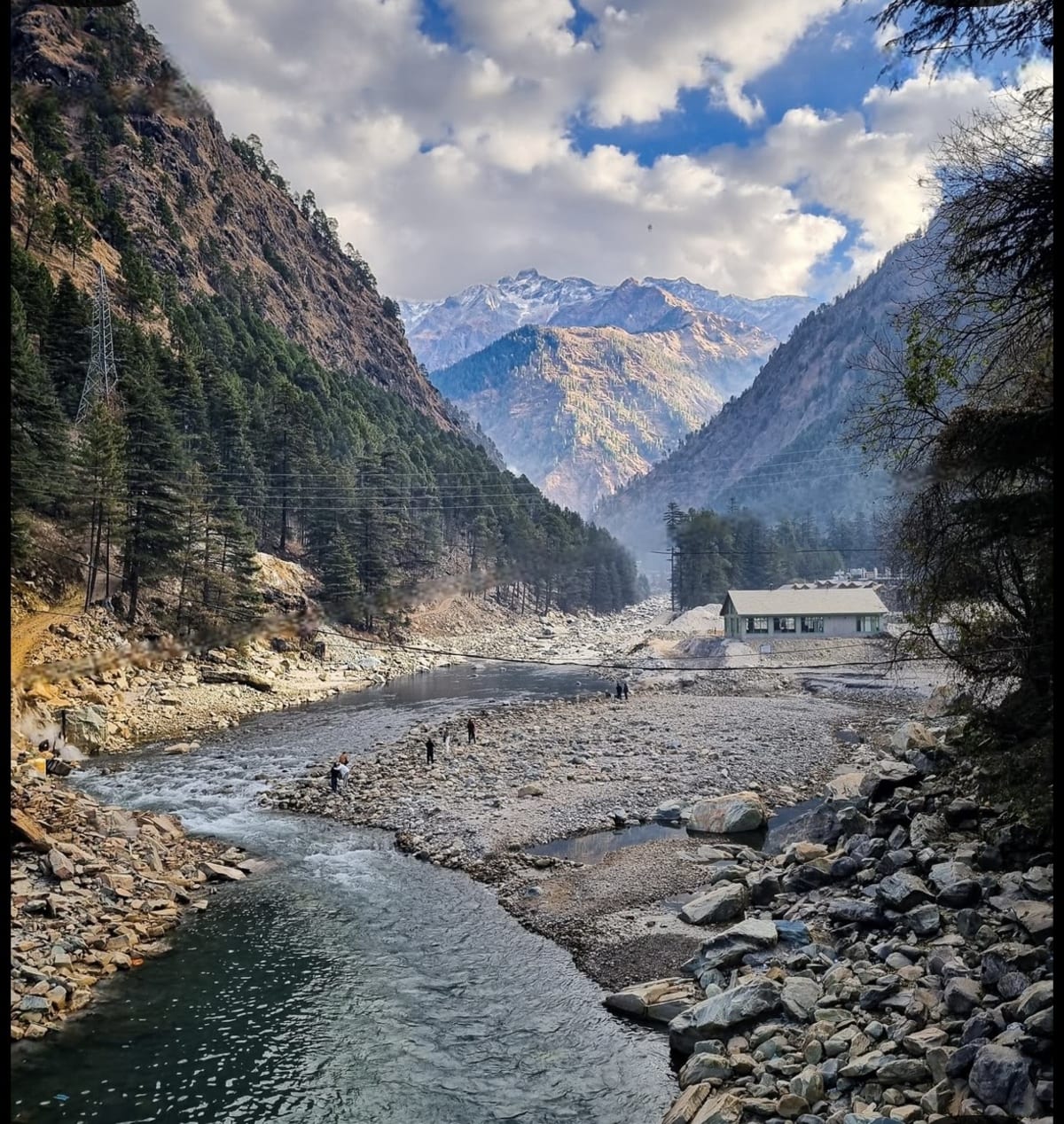
Escape to the cool mountains of Parvati Valley this summer—explore Kasol, Manikaran, Kheerganga and the peaceful villages along the Parvati River with TravelTech.
Quick answer: Parvati Valley in Himachal Pradesh covers Kasol, Manikaran Sahib with its hot springs, Chalal, Tosh, Malana and the Kheerganga trek, which is about 12 km from Barshaini. Spend 3–5 days, go between March and June or September and November, and reach Kasol via Bhuntar, about 30 km away, or by overnight bus from Delhi.
Long before Kasol became known for cafés, backpackers and riverside camps, the Parvati Valley already had a much older story attached to it.
According to a traditional legend associated with Manikaran, Lord Shiva and Goddess Parvati were in the valley when Parvati lost a jewel from her earring. The jewel was eventually returned through the intervention of Sheshnag, and the story became associated with the hot springs of Manikaran. The name itself is traditionally explained through mani — jewel — and karan — ear. A Himachal government environmental report records this local legend and its connection with the hot springs.
Walk around Manikaran today and that old story feels surprisingly close. Steam rises beside the Parvati River. Pilgrims move between the temples and Manikaran Sahib. The mountains close in around the road.
Then, a short drive away, Kasol changes the mood completely.
There are riverside cafés, backpackers, village trails, pine forests and the sound of the Parvati flowing almost constantly in the background. The valley is not one single experience. That is precisely why a Parvati Valley trip works so well.
Why Visit Parvati Valley?
Parvati Valley is best explored slowly.
Kasol is the obvious starting point, but the valley stretches into a much larger landscape of villages, forests, pilgrimage sites and trekking routes. Himachal Tourism describes Kasol as a tourist hub on the banks of the Parvati River, while the state’s ecotourism authority identifies Kasol as a base for routes towards Malana and Kheerganga. (Himachal Tourism)
You can spend one morning walking beside the river, an afternoon eating at a café and the next day hiking through the forest. Or you can make the trip more adventurous with Kheerganga.
And if you prefer a structured holiday, TravelTech’s current Himachal routes combine Kasol with Manali, Kullu, Manikaran and, on the longer itinerary, Kheerganga. (TravelTech)
Best Places to Visit in Parvati Valley
1. Kasol
Kasol is where most travellers first understand the personality of Parvati Valley.
The village stretches along the Parvati River and has grown considerably from the smaller settlement it once was. Interestingly, the Himachal Pradesh Ecotourism Society records the old Kasol Forest Rest House as dating to 1915–16, a small reminder that the valley’s story predates today’s café-and-backpacker culture by more than a century. (Himachal Ecotourism)
Spend some time simply walking around Kasol rather than trying to “finish” it.
Sit beside the river. Browse the little shops. Have a long breakfast. Walk across the bridge. Let the day move at mountain speed.
That is often when Kasol works best.
2. Manikaran Sahib
Manikaran is where the Parvati Valley’s spiritual side becomes impossible to miss.
The town sits beside the Parvati River and is important to both Sikh and Hindu pilgrims. Himachal Tourism records the traditional association of Manikaran Sahib with Guru Nanak Dev’s visit and highlights the natural hot sulphur springs beside the gurdwara. (Himachal Tourism)
The experience is different from Kasol. It is quieter in some places, more devotional, and far more rooted in pilgrimage.
If you visit, dress respectfully and allow yourself time to experience the place rather than treating it as just another sightseeing stop.
3. Kheerganga
Kheerganga is the choice for travellers who want to add a proper trek to their Parvati Valley trip.
The route takes you into the upper valley through forest and mountain terrain. It is considerably more demanding than a casual Kasol walk, so footwear, fitness and current trail conditions matter.
TravelTech’s dedicated Manali–Kasol–Kheerganga itinerary currently includes the Barshaini-to-Kheerganga trek, an overnight camp stay and a visit to Manikaran on the return journey. The package currently starts at ₹8,999 per person. (TravelTech)
Trekking access and local rules can change, particularly after heavy rain or other weather events, so check the current local situation before starting a trek.
4. Chalal Village
Chalal is close enough to Kasol to make it a natural addition to a relaxed trip.
The walk takes you away from the busier parts of Kasol and into a quieter landscape of forest, mountain homes and river views.
It is exactly the kind of place where you should stop checking the time.
TravelTech’s current 5N/6D Manali–Kasol itinerary includes a short Chalal walk when time and weather permit. (TravelTech)
5. Malana
Malana is one of the valley’s most culturally distinctive villages.
The District Kullu administration describes its traditional local administrative system, language and strong customs centred around Jamlu Devta. (Kullu District)
This is not a place to arrive treating local traditions as a tourist attraction. Follow village instructions, ask before photographing people and respect restricted areas.
For experienced trekkers and culturally curious travellers, however, Malana adds an entirely different dimension to the Parvati Valley.
6. Parvati River
It sounds almost too obvious to put a river on a sightseeing list.
But in Parvati Valley, the river is part of the journey itself.
You hear it while walking through Kasol. You cross it on village trails. It accompanies the road towards Manikaran and creates much of the atmosphere that makes the valley distinctive.
Sometimes the best sightseeing here is simply finding a safe riverside spot and staying there for half an hour.
Best Time to Visit Parvati Valley
There isn’t one perfect month for everyone. The right time depends on whether you want comfortable walks, greenery, snow or trekking.
Winter — November to February
Winter brings colder nights and, depending on conditions and altitude, snow around the wider Himachal region.
Kasol itself can remain accessible, but mountain roads and trekking routes can be affected by snow, ice and weather. Carry proper layers if travelling in this season.
If your priority is a cosy mountain atmosphere, cafés and cold-weather scenery, winter has its own charm.
Summer — March to June
This is one of the most comfortable periods for exploring the valley.
March and April bring a transition into spring, while May and June are popular for Himalayan travel. Daytime conditions are generally more pleasant for sightseeing and outdoor activities, although mountain weather can change quickly.
For trekking, always check current trail conditions rather than relying only on the calendar.
Monsoon — July to September
This is the season to plan more carefully.
Heavy rain can affect mountain roads, rivers and trekking trails. Landslides and temporary route disruptions are possible in Himalayan regions, so flexibility matters more than a rigid itinerary.
September can feel like a useful transition period, but conditions should still be checked close to departure.
When should you go on a TravelTech group trip?
There is an interesting clue in TravelTech’s current published 2026–27 departure calendar. The Manali–Kasol 5N/6D group trip has repeated departures through October, November and December, with additional departures scheduled from January through March; the Manali–Kasol–Kheerganga route also has multiple October, November, December and March departures. (TravelTech)
So, if you’re specifically planning around TravelTech’s present group calendar, October–December and the winter-to-spring March period have substantial published departure coverage.
🚗 How to Reach
By Air
The nearest useful airport is Kullu-Manali Airport at Bhuntar. Himachal Tourism identifies Bhuntar as the airport serving the Kullu-Manali and Lahaul-Spiti region, while District Kullu notes that Bhuntar is about 10 km from Kullu. From Bhuntar, continue by road towards Kasol and the Parvati Valley. (Himachal Tourism) Flights and schedules can vary seasonally, so check the current flight schedule before planning around the airport.
By Train
There is no convenient broad-gauge railway station inside Parvati Valley. Chandigarh and Kiratpur are practical broad-gauge access points for the Kullu side, while Jogindernagar has a narrow-gauge connection but still requires a substantial road journey onward. (Himachal Tourism) For most travellers, the final leg is by road.
By Road
Road travel is the most straightforward way to reach Kasol. Buses and taxis connect the Kullu-Manali region with major northern cities, and Kasol is connected by road via Bhuntar and Manikaran. Himachal Tourism confirms regular buses and taxis serving Kasol. (Himachal Tourism)
✈️ Related Trips from TravelTech
Manali & Kasol, Himachal Pradesh
Manali Kasol Strangers Group Trip
From ₹6,999/-
per person
Himachal Pradesh
Manali, Kasol & Kheerganga Trip
From ₹8,999/-
per person

Srinagar, Gulmarg, Sonamarg & Pahalgam
Fitoor-E-Kashmir Strangers Trip
From ₹12,999/-
per person
Gangtok, Sikkim & Darjeeling
Gangtok & Darjeeling Trip
View details
728 × 90 — Leaderboard
❓ Frequently Asked Questions
How many days are enough for Parvati Valley?
Is Parvati Valley good for a first-time Himachal trip?
Is Kasol and Parvati Valley the same place?
What is the best month for a Kasol trip?
Can I travel to Parvati Valley from Indore with TravelTech?
Is Kheerganga suitable for beginners?
Are food and activities included in TravelTech’s Kasol packages?
How long is the Kheerganga trek?
How do I reach Kasol?
Is Parvati Valley good for a group trip?
📚 Related Guides
More Travel Stories

Weekend Getaways from Delhi in Winter: 12 Best Places
Find the 12 best winter weekend getaways from Delhi, from Rishikesh and Jaipur to Lansdowne and Jim Corbett, with drive times, budgets and a 2-day plan.

Best Winter Treks in India 2026: 10 Snow Treks for Beginners
Compare the 10 best winter treks in India for 2026, from Kedarkantha and Brahmatal to Nag Tibba, with difficulty, routes, costs and a packing list.

Christmas Trip in India 2026: 8 Best Places to Celebrate
Find the best places for a Christmas trip in India in 2026, from Goa and Shillong to Kochi and Kashmir, with long weekend plans, budgets and booking tips.