
Thousands of steps lead into a forested valley where Khasi communities have guided living tree roots into a remarkable two-level bridge. Plan your Nongriat trek with practical route details, realistic timings, weather advice and essential preparation tips.
Quick answer: The Double Decker Living Root Bridge is in Nongriat village near Sohra (Cherrapunji). The trek starts at Tyrna and involves roughly 3,000–3,500 stone steps down, about 3 km one way, which takes most people 1.5–2.5 hours to descend and longer to climb back. It is a moderate trek with steep steps, so carry water and good shoes, start early, and visit between October and April for the safest conditions. Rainbow Falls is an optional 1–1.5 hour extension.
Introduction: A Bridge That Grows Instead of Being Built
Deep in the green valleys of Meghalaya, beneath a canopy of tropical vegetation, stands a bridge unlike conventional structures. Its framework is formed from the living aerial roots of rubber fig trees, guided and nurtured by local Khasi communities over many years.
The Double Decker Living Root Bridge is located in Nongriat village in Meghalaya's East Khasi Hills district. Reaching it requires travelling to Tyrna village and descending thousands of steps into a forested valley. The reward is more than an unusual bridge: it is an opportunity to experience traditional ecological knowledge, village life, and a landscape shaped by water, roots, and rainfall.
This is not a casual sightseeing stop. The return climb can be demanding, especially after rain, and the journey requires proper footwear, sufficient water, and realistic time planning.
This guide covers the trek route, estimated duration, difficulty, best season, transport options, packing checklist, itinerary, and practical travel tips.
Understanding Nongriat and Its Living Root Bridge
Where Is the Double Decker Living Root Bridge?
Nongriat is a village in Meghalaya's East Khasi Hills, reached on foot from the trailhead at Tyrna village, near Sohra, commonly known as Cherrapunji.
The Khasi and Jaintia communities have traditionally guided the aerial roots of Ficus elastica, or rubber fig trees, across streams and ravines to create living bridges. The roots are carefully positioned and allowed to strengthen and intertwine as they grow. These structures reflect generations of local knowledge and adaptation to a high-rainfall environment.
Why Is It Called a Double Decker Bridge?
The name describes its defining feature: two bridge levels arranged one above the other. Rather than being assembled using conventional steel and concrete, the bridge develops through the careful guidance and maintenance of living roots.
It represents more than an unusual architectural feature. The structure demonstrates how local communities have adapted to difficult terrain by working with nature rather than relying exclusively on conventional construction.
What Makes the Trek Worthwhile?
Living architecture: Observe how tree roots form a functional crossing.
Forest landscapes: Walk through lush vegetation and a valley shaped by streams and rainfall.
Khasi heritage: Learn about a traditional practice connected to local life.
Adventure: Experience a physically demanding stairway trek.
Optional extension: Continue towards Rainbow Falls if weather, fitness, and daylight allow.
The bridge is the main attraction, but the forest walk and the experience of reaching Nongriat are equally important parts of the journey.
Double Decker Living Root Bridge Trek: Route, Distance, and Time
Trek Route at a Glance
Route: Sohra → Tyrna village → Nongriat village → Double Decker Living Root Bridge → return to Tyrna.
Starting point: Tyrna village.
Trek difficulty: Moderate to challenging, depending on fitness and trail conditions.
Steps: Approximately 3,000–3,500 steps along the descent, according to commonly cited tourism guidance.
Return trekking time: Approximately 4–6 hours for many visitors, excluding substantial extensions and allowing for variation in pace.
Step 1: Sohra to Tyrna Village
Travel by road from Sohra to Tyrna, where the trekking route begins. The drive generally takes around 30–45 minutes, depending on your starting point and road conditions.
Step 2: Descend from Tyrna to Nongriat
The trail descends through a long series of steps, forested sections, and stream crossings. Take your time, especially on wet or uneven surfaces.
Step 3: Visit the Living Root Bridge
Once you reach Nongriat, explore the bridge and its surroundings. Allow time to rest and appreciate the structure instead of rushing straight back.
Step 4: Climb Back to Tyrna
The return journey involves a sustained uphill climb. Keep enough energy and daylight for the ascent, and take regular breaks if necessary.
How Long Does the Trek Take?
The return trek commonly takes around 4–6 hours, but the duration depends on your fitness, walking pace, weather, and rest stops. Tourism guidance recommends allowing a substantial part of the day for this outing.
Activity | Suggested time allowance |
|---|---|
Sohra to Tyrna by road | 30–45 minutes |
Descent to Nongriat | Around 1.5–2 hours |
Bridge visit and rest | 30–60 minutes |
Climb back to Tyrna. | Around 2–3 hours |
Additional stops | Keep extra time available. |
These are planning estimates, not guaranteed timings. Start early and avoid scheduling a tight airport transfer or another distant attraction immediately afterwards.
Is the Trek Easy or Difficult?
The trek is best described as moderate to challenging for many visitors, primarily because of the long stair descent and sustained uphill return.
Beginners with reasonable fitness may manage it at a comfortable pace.
Travellers with knee problems or limited mobility should carefully assess whether the stairs are appropriate for them.
Anyone with a heart condition or another health issue that may limit strenuous exercise should seek medical advice before attempting the trek.
Families should consider every child's stamina and ability to manage prolonged stair climbing.
Travellers uncomfortable with steep steps should consider an easier-to-access living root bridge elsewhere in Meghalaya.
Do not judge the trek only by distance. The repeated climbing and descending are what make it demanding.
What to See Along the Nongriat Trek
The Double Decker Living Root Bridge
The bridge is the main reason to make the descent. Observe how the roots cross the water, overlap, and form a walkable structure.
Take time to understand the craftsmanship involved in guiding living roots into position. Follow local instructions, avoid overcrowding, and never pull at or damage the roots.
Streams and Suspension Bridges
The route includes forested sections, stream crossings, and suspension bridges. These features add variety to the walk but require care, particularly when the surfaces are wet.
Use handrails, cross carefully, and follow local guidance. Do not run or jump on bridges.
Rainbow Falls: An Optional Extension
Rainbow Falls is an additional trekking destination beyond the main root-bridge area. Reaching it requires further walking, so it should not be treated as a quick add-on to an already demanding day.
Consider the extension only if you have sufficient daylight, favorable weather, suitable fitness, and enough time for the return journey.
Planning tip: If Rainbow Falls is a priority, consider staying overnight in Nongriat. This gives you more flexibility than trying to complete every stop in a single day.
Best Time to Visit the Double Decker Living Root Bridge
Meghalaya's weather can change quickly. The best visiting period depends on whether you prioritize more comfortable trekking conditions, monsoon greenery, or cooler weather.
Season | What to expect | Recommendation |
|---|---|---|
October–November | Post-monsoon greenery, with conditions gradually becoming drier | A good period to consider |
December–February | Cooler weather and often more comfortable walking conditions | Suitable for cooler-day trekking |
March–April | Warmer conditions and opportunities for outdoor activities | Good with an early start |
May–September | Monsoon rainfall, wet steps, and potentially difficult stream crossings | Requires particular caution |
October to March is commonly recommended for visiting the living root bridges, although conditions vary and rainfall can occur outside the main monsoon season.
Best Season for First-Time Trekkers
For many first-time visitors, October to March is a practical period to plan around. Choose a day with favorable weather and begin early enough to complete the return climb without rushing.
Is Monsoon Trekking Worth It?
The landscape can be exceptionally green during the monsoon, but rainfall can make steps slippery and streams more difficult to cross. Heavy rain may also affect visibility, road access, and trail conditions.
Check the forecast and ask local accommodation providers about current conditions. Postpone the trek if the weather or trail is unsafe.
How to Reach Indore
For travellers starting in Indore, a practical plan is to:
Book a flight to Guwahati, checking available connections and layovers.
Travel from Guwahati to Shillong by road, or stay overnight in Guwahati if your flight arrives late.
Continue to Sohra and stay there before the trek.
Arrange an early transfer to Tyrna the following morning.
Avoid booking a tightly timed flight immediately after the trek. Weather, road conditions, and the return climb can cause delays.
What to Pack for the Nongriat Trek
The right equipment makes a noticeable difference on a route with thousands of steps.
Essential Packing Checklist
Trekking shoes with reliable grip.
A small backpack and sufficient drinking water.
A rain jacket or lightweight waterproof layer.
Quick-drying clothes and spare socks.
Snacks or energy-rich food.
Personal medication and basic first-aid supplies.
Insect repellent and sunscreen.
Cash for local purchases.
A fully charged phone and power bank.
A waterproof pouch for electronics.
Choose Footwear Carefully
Use trekking or hiking shoes with good traction. Smooth-soled fashion sneakers and worn-out sandals are poor choices for steep, wet steps.
Carry Water and Food
Carry enough drinking water for the outing and some snacks. Do not rely on shops being open or stocked throughout the route. Carry your rubbish back with you.
Start Early
An early start provides more daylight for the descent, the bridge visit, and the return climb. Avoid rushing to meet an arbitrary turnaround time.
Check Weather and Trail Conditions
Before leaving, check the local forecast and ask your accommodation provider about recent rainfall, trail access and any temporary restrictions.
Where to Stay: Sohra or Nongriat?
Stay in Sohra for a Day Trek
Sohra is a practical base if you want to complete the trek in one day and return to a conventional hotel or guesthouse.
Best for: First-time visitors, travellers with limited time and those who prefer more accommodation choices.
Stay Overnight in Nongriat
Basic homestays and guesthouses in Nongriat can offer a slower alternative. Staying overnight allows you to divide the journey across two days and consider Rainbow Falls without squeezing every activity into one exhausting outing.
Best for: Trekkers, nature enthusiasts and travellers comfortable with simpler accommodation.
Confirm availability, meals, facilities and check-in arrangements directly before travelling. Do not assume every property offers hot water, private bathrooms or card payments.
Food, Culture and Local Experiences
Khasi Food
Meghalayan food traditions include rice, meat preparations, seasonal vegetables and locally available ingredients.
Two dishes to look out for are:
Jadoh: A rice preparation commonly associated with Khasi cuisine, often made with meat.
Dohneiiong: A pork preparation made with black sesame.
Availability varies between restaurants and villages. Vegetarian travellers should communicate dietary requirements clearly before ordering or arranging meals.
Respect Local Village Life
Nongriat is a living community, not simply a trekking attraction. Respect private homes, ask permission before photographing residents, follow local guidance and stay on designated paths.
Using locally operated accommodation and services where practical can help support the community.
Responsible Trekking
Carry reusable water bottles where practical.
Never leave litter along the trail, streams or bridges.
Avoid loud music in the forest and village.
Do not damage roots, plants or natural features.
Follow local advice around pools and waterfalls.
A Practical Nongriat Itinerary
Option A: One-Day Double Decker Root Bridge Trek
Suitable for travellers staying in Sohra the previous night.
Time | Plan |
|---|---|
6:30–7:30 AM | Breakfast and transfer towards Tyrna |
7:30–9:30 AM | Begin the descent, allowing for breaks |
9:30–10:30 AM | Reach the bridge area, depending on pace |
10:30–11:30 AM | Explore the bridge and rest |
11:30 AM onwards | Begin the return climb at a sensible time |
Afternoon | Return to Tyrna and transfer to Sohra |
These are suggested planning windows, not guaranteed arrival times. Adjust them according to your pace, local advice and weather.
Do not add Rainbow Falls unless you have verified that the extended route can be completed safely within the available daylight.
Option B: Two Days with an Overnight Stay
Day 1: Travel to Tyrna, descend to Nongriat, visit the Double Decker Living Root Bridge and check into a pre-booked homestay. Keep the rest of the day flexible.
Day 2: If weather, fitness and local advice permit, visit Rainbow Falls or explore the surrounding area. Begin the return journey with sufficient daylight and transfer back to Sohra or your next destination.
This option is generally more relaxed, but an overnight stay does not eliminate the physical difficulty of the trek.
Budget Planning: What Will the Trek Cost?
The overall cost depends on transport, accommodation, food, group size and whether you hire a local guide. There is no single reliable total for every traveller.
Expense | Budget consideration |
|---|---|
Flights or train tickets | Depends on origin, dates and booking time |
Guwahati–Shillong–Sohra transport | Depends on private cab, shared transport and route |
Accommodation | Varies by property and room type |
Meals and snacks | Depends on preferences and availability |
Local guide | Confirm the current rate and whether the service is required |
Local fees | Verify current village, parking or attraction charges |
Rainbow Falls extension | Allow for extra time, food and possibly an overnight stay |
Important: Entry charges, guide fees and accommodation prices should be confirmed locally.
Is a Guided Trip Worth It?
A local guide can help with route familiarity, local customs, weather-related decisions and practical coordination. For first-time trekkers unfamiliar with the region, this support may be useful.
Before booking a guided trip, confirm whether it includes transport to Tyrna, accommodation, meals, guide services, local charges and the trek itself.
TravelTech Packages for Meghalaya
TravelTech offers Meghalaya itineraries that cover the wider region. These can help travellers organise transport, accommodation and sightseeing, although the specific Nongriat trek must be confirmed against the chosen itinerary.
Meghalaya Road Trip Ex Guwahati — 5 Nights, 6 Days
Explore the TravelTech Meghalaya Road Trip Ex Guwahati.
The published package page lists a starting price of ₹18,999 per person. It includes five nights of accommodation and selected meals. The listed accommodation includes stays in Shillong, Sohra and Shnongpdeng. Lunch and entry fees are among the exclusions listed on the page.
+1
Prices vary by room-sharing category and departure date. Confirm current availability before booking.
Important: The presence of living root bridges in a general itinerary does not automatically confirm that the full Double Decker trek is included. Ask TravelTech specifically about Nongriat, Tyrna transfers, trekking time and local guide or entry charges.
Meghalaya with Kaziranga National Park — 6 Nights, 7 Days
Explore the TravelTech Meghalaya with Kaziranga National Park package.
The listed starting price is ₹20,999 per person for the lowest displayed sharing category. The itinerary combines Meghalaya sightseeing with Kaziranga in Assam. Accommodation, meals and other inclusions should be checked against the current package terms.
+1
Best for: Travellers who want a broader Northeast India holiday rather than a trek-focused trip.
Customise Your Meghalaya Trek
For travellers whose main priority is Nongriat, a customised itinerary may be more appropriate than a general sightseeing package.
Visit TravelTech to explore trip options.
Ask for an itinerary that includes a night in Sohra before the trek, an early Tyrna transfer, realistic return-climb timing and optional overnight accommodation in Nongriat. Confirm every inclusion and exclusion before making payment.
Who Should Choose This Trek?
Adventure seekers: A good choice for people comfortable with long stair climbs and uneven terrain.
Friend groups: Suitable when everyone has comparable fitness and agrees on a sensible pace.
Couples: A memorable shared outdoor experience if both travellers are comfortable with strenuous walking.
Solo travellers: Possible with careful preparation, clear logistics and appropriate local support.
Families: Assess the age, stamina and mobility of every participant before committing.
Travellers with mobility limitations: The long, steep stair route may be unsuitable for many people with limited mobility.
No itinerary can guarantee trail safety. Weather, water conditions and individual fitness all matter.
Essential Travel Tips Before You Go
Keep a Flexible Schedule
Avoid combining the trek with a tightly timed airport transfer or another distant attraction on the same day.
Carry Cash
Do not assume digital payments will work reliably in remote areas. Keep enough cash for food, local purchases and unexpected transport needs.
Do Not Underestimate the Return Climb
The descent can feel easy at first, but the ascent is physically demanding. Take breaks, maintain a steady pace and skip optional extensions if you are tired.
Confirm Local Access Rules
Check current access arrangements, village instructions and any restrictions before visiting. Local conditions can affect access even when the attraction itself has no conventional monument-style opening hours.
Have a Plan for Rain
A waterproof layer and a dry change of clothes can make the journey more comfortable. If heavy rain makes the trail or water crossings unsafe, postpone the trek rather than taking unnecessary risks.
✈️ Related Trips from TravelTech
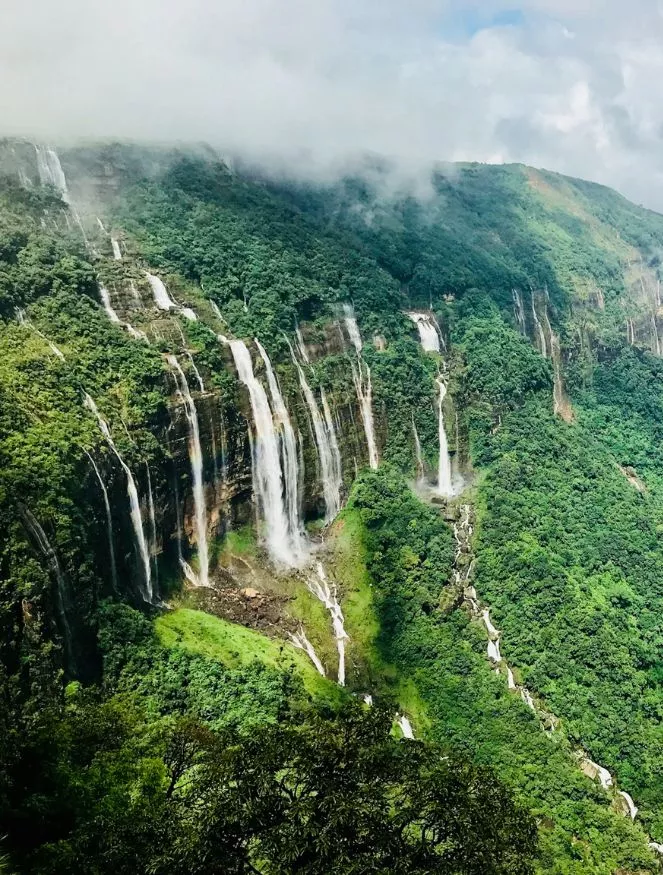
Shillong & Cherrapunji, Meghalaya
Meghalaya Road Trip (Ex Guwahati)
From ₹18,999/-
per person
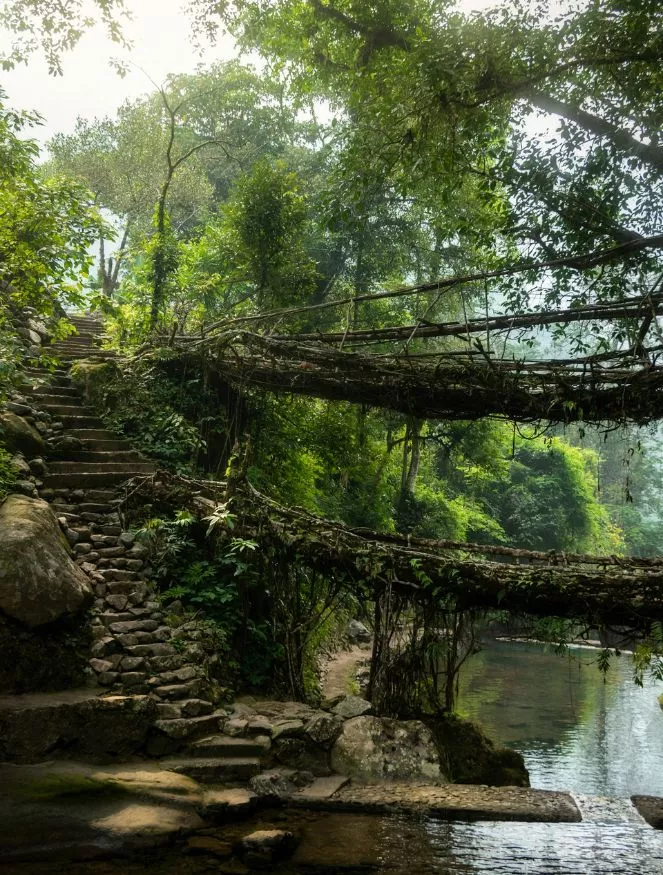
Meghalaya & Assam
Meghalaya with Kaziranga National Park
From ₹20,999/-
per person
Gangtok, Sikkim & Darjeeling
Gangtok & Darjeeling Trip
View details

Srinagar, Gulmarg, Sonamarg & Pahalgam
Fitoor-E-Kashmir Strangers Trip
From ₹12,999/-
per person
728 × 90 — Leaderboard
❓ Frequently Asked Questions
Where is the Double Decker Living Root Bridge?
How many steps are there to the Double Decker Root Bridge?
How long does the Nongriat trek take?
Is the Double Decker Root Bridge trek difficult?
How far is Nongriat from Shillong?
Can I stay overnight in Nongriat?
What is the best time for the root bridge trek?
Is Rainbow Falls worth the extra trek?
What should I carry for the Nongriat trek?
Does TravelTech run Meghalaya group trips?
📚 Related Guides
More Travel Stories

Weekend Getaways from Delhi in Winter: 12 Best Places
Find the 12 best winter weekend getaways from Delhi, from Rishikesh and Jaipur to Lansdowne and Jim Corbett, with drive times, budgets and a 2-day plan.

Best Winter Treks in India 2026: 10 Snow Treks for Beginners
Compare the 10 best winter treks in India for 2026, from Kedarkantha and Brahmatal to Nag Tibba, with difficulty, routes, costs and a packing list.

Christmas Trip in India 2026: 8 Best Places to Celebrate
Find the best places for a Christmas trip in India in 2026, from Goa and Shillong to Kochi and Kashmir, with long weekend plans, budgets and booking tips.