
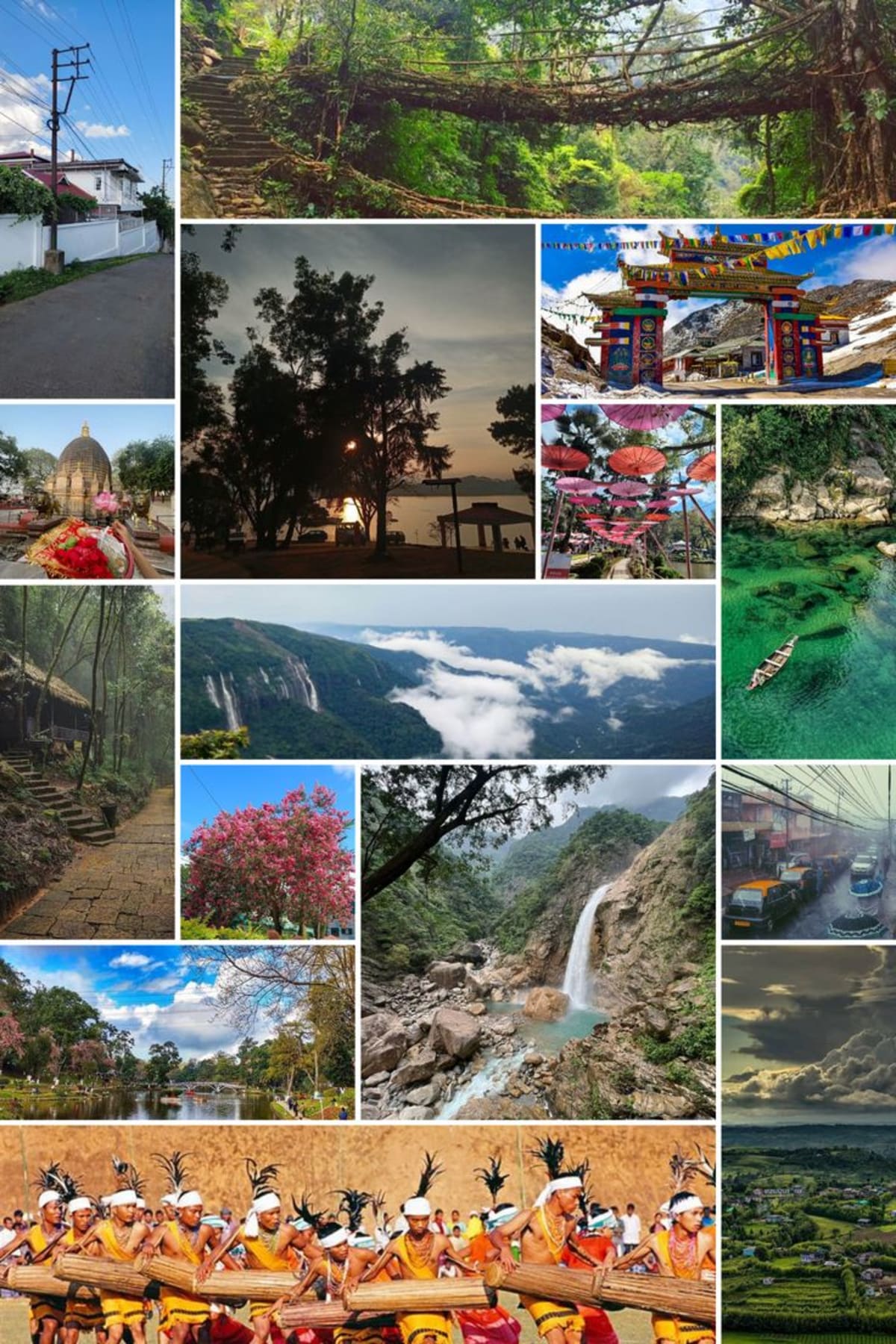
Explore Meghalaya in six days, from Shillong's lively hill-town atmosphere to Cherrapunji's dramatic waterfalls and Dawki's clear river waters. Plan your route, discover local culture and make the most of this Northeast India road trip.
Quick answer: A 6-day Meghalaya itinerary from Guwahati works best as: Day 1 Guwahati to Shillong via Umiam Lake, Day 2 Shillong to Sohra (Cherrapunji), Day 3 the living root bridge trek in Nongriat, Day 4 Mawlynnong and an overnight at Shnongpdeng, Day 5 Dawki and back to Shillong, and Day 6 return to Guwahati. October to April is the best time, and the trip costs from ₹18,999 per person on TravelTech's Meghalaya road trip.
Introduction: Six Days in the Land of Clouds
The character of Meghalaya changes with the road. Around Shillong, pine-covered hills meet busy markets and cafés. In Sohra, formerly known as Cherrapunji, the plateau breaks into deep valleys, limestone caves, and waterfalls. Further south, the Umngot River near Dawki draws visitors with its remarkably clear water, particularly when conditions allow the riverbed to show through.
This six-day journey explores the Khasi Hills and southern Meghalaya, beginning and ending in Guwahati, Assam. It suits first-time visitors looking for nature, local culture, scenic drives, and outdoor experiences without attempting to cover the entire state.
A well-paced Meghalaya 6-day itinerary from Guwahati should prioritize three experiences: Shillong's hill-town atmosphere, Sohra's waterfalls and caves, and the Dawki-Shnongpdeng river region. The famous living root bridges can also be included for travelers comfortable with a demanding trek.
Why Visit Meghalaya for Six Days?
Meghalaya offers several distinct experiences within a manageable road-trip circuit.
Shillong: The Cultural Hill Town
Shillong combines busy markets, cafés, viewpoints, and Khasi cultural identity. It provides a comfortable introduction to Meghalaya before the journey continues into the countryside.
Sohra: Waterfalls, Caves, and Cliffs
Sohra is known for heavy rainfall, deep valleys, limestone formations, and dramatic escarpments. It is one of the most rewarding stops for travellers interested in natural landscapes.
Dawki and Shnongpdeng: Riverside Experiences
The Umngot River offers opportunities for boating and other water activities, depending on conditions. Shnongpdeng is particularly popular for riverside stays and outdoor experiences.
Six days allows time for these contrasting landscapes without changing accommodation every night. However, the itinerary requires realistic driving allowances and flexibility around weather.
Meghalaya 6-Day Itinerary from Guwahati
This route is designed for travelers arriving at Guwahati Airport or Railway Station and continuing by private vehicle or pre-arranged tourist transport. Driving times are approximate and can increase because of traffic, rain, or roadwork.
Day 1: Guwahati to Shillong via Umiam Lake
Overnight stay: Shillong
Arrive at Guwahati Airport or Railway Station.
Drive towards Shillong, allowing approximately 3–4 hours or longer depending on traffic and your starting point.
Stop at Umiam Lake if time permits.
Explore Police Bazaar or visit a local café in Shillong.
Enjoy dinner and rest after the journey.
Travel tip: Keep the first day flexible. A delayed arrival or slow road transfer can reduce sightseeing time.
Day 2: Shillong to Sohra (Cherrapunji)
Overnight stay: Sohra
Leave Shillong in the morning.
Visit Laitlum Canyon if visibility and timing permit, keeping in mind that it requires a detour.
Explore Arwah Cave or another suitable cave attraction.
Visit Nohkalikai Falls and its designated viewpoints.
Check into your accommodation in Sohra.
Sohra deserves an overnight stay because its attractions are spread across the plateau and surrounding valleys.
Day 3: Sohra and the Living Root Bridge
Overnight stay: Sohra
Start early for the trek from Tyrna to Nongriat and the Double Decker Living Root Bridge.
Allow most of the day for the descent, exploration, breaks, and return climb.
Carry drinking water, suitable footwear, and rain protection.
The trek involves many steps and can be physically demanding. Travellers who prefer a relaxed holiday can instead visit nearby waterfalls, viewpoints, or caves.
Important: Do not combine the full Nongriat trek with a packed list of other attractions. It deserves most of the day.
Day 4: Sohra to Mawlynnong and Shnongpdeng
Overnight stay: Shnongpdeng or the Dawki area
Visit Mawsmai Cave if it was not covered earlier.
Drive towards Mawlynnong for a village walk and local lunch.
Continue to Shnongpdeng, beside the Umngot River.
Check into a riverside camp or homestay.
Spend the evening enjoying the river surroundings.
Allow sufficient time for the road journey. Avoid adding too many extra stops to this day.
Day 5: Dawki to Shillong
Overnight stay: Shillong
Enjoy a morning boat ride on the Umngot River, subject to weather and local operating conditions.
Try kayaking or other activities only when offered by suitable operators with appropriate safety arrangements.
Begin the drive back to Shillong with enough daylight.
Spend the evening shopping, dining, or relaxing in town.
River clarity varies with rainfall, water levels, sediment, and sunlight. The famous transparent-water effect is not guaranteed.
Day 6: Shillong to Guwahati
The trip concludes.
Leave Shillong early enough for your flight or train.
Stop at Umiam Lake only if time allows.
Allow a substantial buffer for traffic and unexpected road delays.
If your return flight is early in the morning, consider spending the final night in Guwahati instead of Shillong.
Best Places to Visit in Meghalaya
Shillong
Shillong is more than a transit point. Its lively streets, local food stalls, shopping areas, and music culture offer a different experience from the waterfalls and river valleys outside the city.
Police Bazaar: A central shopping and food area with clothing, local products, and snacks.
Ward's Lake: A landscaped lake and garden suitable for a leisurely visit, subject to current opening hours.
Don Bosco Museum: A cultural museum showcasing the diversity of Northeast India's communities and traditions.
Practical tip: Check opening hours before visiting museums and other attractions, especially on public holidays.
Umiam Lake
Umiam Lake, also known as Barapani, is a large reservoir surrounded by hills north of Shillong. It lies along the main Guwahati–Shillong road route, making it a convenient stop on arrival or departure day.
A short stop at an accessible viewpoint is usually sufficient. Avoid spending too much time here if you have a long transfer ahead.
Sohra and Nohkalikai Falls
Sohra is one of Meghalaya's best-known destinations, recognized for heavy rainfall, steep escarpments, and spectacular waterfalls.
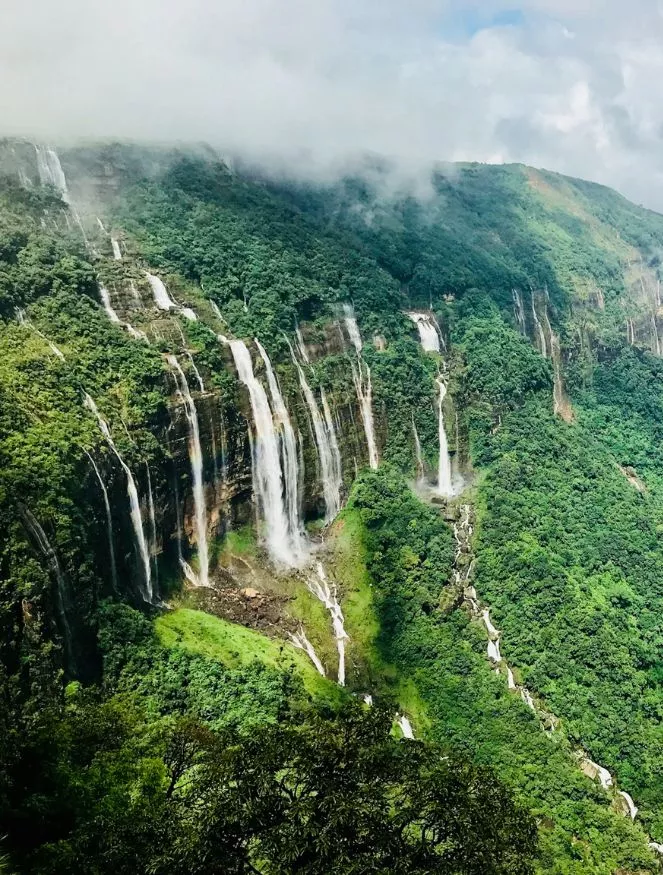
Nohkalikai Falls: This major waterfall drops approximately 340 meters from the plateau into a plunge pool below. Its appearance varies with rainfall, cloud cover, and visibility. The monsoon can produce a powerful flow, while drier weather may offer clearer views of the surrounding cliffs.
Other worthwhile attractions include
Seven Sisters Falls (Nohsngithiang): A multi-stream waterfall on the escarpment, most impressive when water flow and visibility are favorable.
Arwah Cave: Known for limestone formations and fossil-bearing rock.
Mawsmai Cave: A popular limestone cave with narrow passages and uneven surfaces that may become slippery.
Laitlum Canyon: A dramatic valley viewpoint known for layered hills and steep terrain. Cloud cover can limit visibility.
Verify current entrance fees, opening hours, and access conditions locally before visiting.
Mawlynnong
Mawlynnong is known for community-led cleanliness and maintained village pathways. It provides an opportunity to experience a lived-in Khasi village rather than simply another scenic viewpoint.
Walk respectfully, follow local instructions, and ask permission before photographing residents or private property. The village's cleanliness reflects community effort, so visitors should avoid littering.
Mawlynnong combines naturally with the Dawki region, although the road journey requires adequate time.
Dawki and Shnongpdeng
The Umngot River is the centerpiece of the Dawki experience. Its clear water can create the impression that boats are floating above the riverbed. The effect depends on sunlight, water level, recent rainfall, and sediment.
Dawki is a border town near Bangladesh, while Shnongpdeng is popular for riverside camping and outdoor activities.
Experiences include:
Boating: A classic way to experience the river.
Kayaking: An active option when local operators offer it.
Riverside camping: Suitable for travellers who want to spend more time by the water.
Photography: Morning light can be attractive, but clear water is never guaranteed.
Check local conditions, operator standards, and safety arrangements before entering the river or participating in adventure activities.
Nongriat and the Double Decker Living Root Bridge
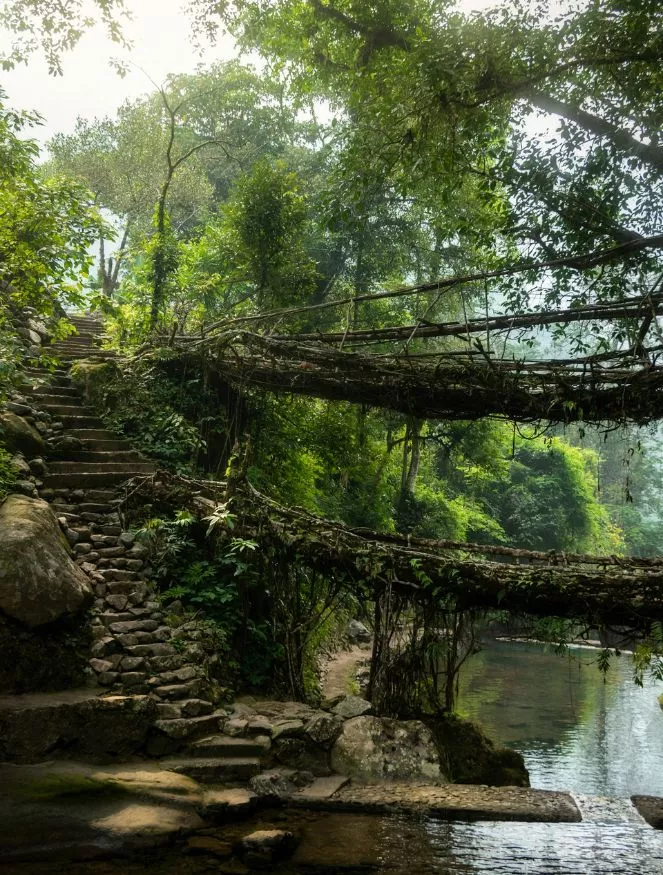
Living root bridges are formed by guiding the aerial roots of rubber fig trees across streams and gaps. Over time, the roots grow into functional structures that reflect a long-standing relationship between Khasi communities and their forest environment.
The Double Decker Living Root Bridge near Nongriat is a famous example. Reaching it requires a substantial descent and return climb via Tyrna, involving many steps.
Allow most of a day, check local trail conditions, and avoid attempting the trek if you are unprepared for steep stairs, humidity, or slippery surfaces.
Best Time to Visit Meghalaya
Meghalaya's weather is central to the experience. The season that produces the most dramatic waterfalls is not necessarily the easiest season for road travel.
October to November: Scenic Exploration
This is a useful period for combining sightseeing, road travel, and outdoor activities after the main monsoon. Conditions can still vary, so check forecasts before departure.
December to February: Cooler and Generally Drier
These months suit sightseeing, village walks, and viewpoints. Nights and early mornings can be cold, and some waterfalls may have less water.
March to May: Spring into Early Summer
This can be a reasonable period for exploring hills and countryside. Temperatures and rainfall vary, so prepare for changing conditions.
June to September: Monsoon Landscapes
Waterfalls and greenery can be spectacular, but heavy rain may bring poor visibility, slippery trails, landslides and road disruptions. Flexibility is essential.
Recommendation: October to April is a practical starting window for first-time visitors who prioritise sightseeing and road travel. Monsoon travel may appeal to waterfall enthusiasts but requires greater caution.
landslides,
Meghalaya's food and cultural identity are important parts of the journey, particularly around Shillong and Khasi villages.
What to Eat in Meghalaya
Jadoh: A Khasi rice dish commonly prepared with meat, often pork. Ingredients and preparation vary between kitchens.
Dohneiiong: A traditional Khasi pork preparation featuring black sesame.
Pumaloi: A steamed rice preparation associated with Khasi cuisine, often served alongside other dishes.
Vegetarian visitors can find rice, vegetable dishes, local greens, lentils and other options, particularly in Shillong. Ask about ingredients because meat and animal products may be used in broths or mixed dishes.
Cultural Experiences Worth Exploring
Browse Shillong's markets for local produce, crafts and everyday food.
Learn about Khasi traditions through museums, community spaces and respectful village visits.
Try locally grown tea and regional snacks.
Check official schedules if your travel dates coincide with a local festival.
Khasi, Garo and Jaintia communities have distinct cultural traditions. A short journey through the Khasi Hills should not be presented as a complete picture of Meghalaya's cultural diversity.
Budget for a Six-Day Meghalaya Trip
Your total cost depends on travel dates, accommodation standards, group size, vehicle arrangements and paid activities.
Expense | What to account for |
|---|---|
Flights or trains | Return travel to Guwahati from your starting city |
Accommodation | Five nights in hotels, homestays or camps |
Local transport | Guwahati transfers and sightseeing across Meghalaya |
Food | Breakfast, lunch, dinner, snacks and drinks |
Activities | Boating, kayaking, cave entry and trekking support |
Miscellaneous | Shopping, tips, weather-related changes and unexpected expenses |
Budget guidance: Obtain actual transport and accommodation quotes before setting a total. A single generic per-person estimate can be misleading without details about occupancy, transport, meals and activities.
For a customised holiday, request itemised pricing for your exact dates and group size. Confirm whether entry tickets, river activities, meals and airport transfers are included.
TravelTech's Meghalaya Road Trip
TravelTech lists a relevant product: Meghalaya Road Trip Ex Guwahati.
The published listing describes a six-day journey covering Shillong, Sohra, the living root bridges, Mawlynnong and Shnongpdeng.
Package Details
Duration: 5 nights / 6 days.
Displayed starting price: ₹18,999 per person.
Accommodation: Five nights, including a riverside camp at Shnongpdeng.
Meals: Five breakfasts and one dinner, as stated in the listing.
Exclusions: Lunch and monument or activity entry fees unless specifically stated otherwise.
Availability: The listing currently states that no batches are available.
The displayed price is not confirmation of a bookable departure. Prices, inclusions and availability should be reconfirmed before booking.
Review the actual day-by-day schedule, trek difficulty, accommodation arrangements and inclusions before choosing the package. For different dates, family requirements or a less strenuous pace, ask TravelTech whether a customised itinerary is available.
Explore the TravelTech Meghalaya Road Trip for the published itinerary or contact the team to discuss your requirements.
Practical Tips Before You Travel
Book accommodation early: Popular periods, holidays and festival dates can increase demand in Shillong and Sohra.
Pack for rain: A waterproof jacket, quick-drying clothes and shoes with good grip are useful.
Keep the itinerary flexible: Weather and road conditions can affect waterfalls, viewpoints and river activities.
Carry some cash: Do not assume every small vendor or activity operator accepts digital payments.
Respect local communities: Follow village rules, ask before photographing people and avoid littering.
Check road advisories: Verify current restrictions before travelling, particularly during the monsoon.
Confirm activity safety: Check equipment, operator instructions, weather and local restrictions before entering rivers or undertaking strenuous treks.
Plan your return transfer carefully: Avoid scheduling a tight airport connection after a long road journey.
🗓️ Best Time to Visit
Spring (March–April)
Fresh & Colourful
Pleasant weather, green hills, blooming landscapes, and comfortable conditions for sightseeing
Summer (May–June)
Lush & Refreshing
Waterfalls begin to look more impressive, and the hills feel vibrant, though rainfall can increase.
🚗 How to Reach
By Air :-
Fly to Lokpriya Gopinath Bordoloi International Airport, Guwahati, the main air gateway for most Meghalaya trips. From there, Shillong is approximately 100 km away by road. Shillong also has a regional airport at Umroi, but flight options are limited.
By Train :-
The nearest major railway station is Guwahati Railway Station, connected to several Indian cities. From Guwahati, continue to Shillong by taxi, shared cab, or bus. There is no direct railway connection to Shillong.
By Road :-
Meghalaya is accessible from Guwahati via National Highway 6 and connecting routes. Guwahati to Shillong usually takes around 3–4 hours, depending on traffic and weather. For a six-day itinerary covering Shillong, Cherrapunji (Sohra), and Dawki, road travel is the most practical way to explore the region.
✈️ Related Trips from TravelTech
Shillong & Cherrapunji, Meghalaya
Meghalaya Road Trip (Ex Guwahati)
From ₹18,999/-
per person
Meghalaya & Assam
Meghalaya with Kaziranga National Park
From ₹20,999/-
per person
Gangtok, Sikkim & Darjeeling
Gangtok & Darjeeling Trip
View details

Srinagar, Gulmarg, Sonamarg & Pahalgam
Fitoor-E-Kashmir Strangers Trip
From ₹12,999/-
per person
728 × 90 — Leaderboard
❓ Frequently Asked Questions
Is six days enough for Meghalaya?
What is the best route for a Meghalaya trip from Guwahati?
How many nights should I stay in Shillong?
Is Dawki worth visiting?
Can families with children visit Meghalaya?
Is Meghalaya suitable during the monsoon?
Can I book a Meghalaya package with TravelTech?
Plan Your Meghalaya Journey with TravelTech?
Does this itinerary include the living root bridge trek?
Does TravelTech run Meghalaya group trips?
📚 Related Guides
More Travel Stories

Weekend Getaways from Delhi in Winter: 12 Best Places
Find the 12 best winter weekend getaways from Delhi, from Rishikesh and Jaipur to Lansdowne and Jim Corbett, with drive times, budgets and a 2-day plan.

Best Winter Treks in India 2026: 10 Snow Treks for Beginners
Compare the 10 best winter treks in India for 2026, from Kedarkantha and Brahmatal to Nag Tibba, with difficulty, routes, costs and a packing list.

Christmas Trip in India 2026: 8 Best Places to Celebrate
Find the best places for a Christmas trip in India in 2026, from Goa and Shillong to Kochi and Kashmir, with long weekend plans, budgets and booking tips.