
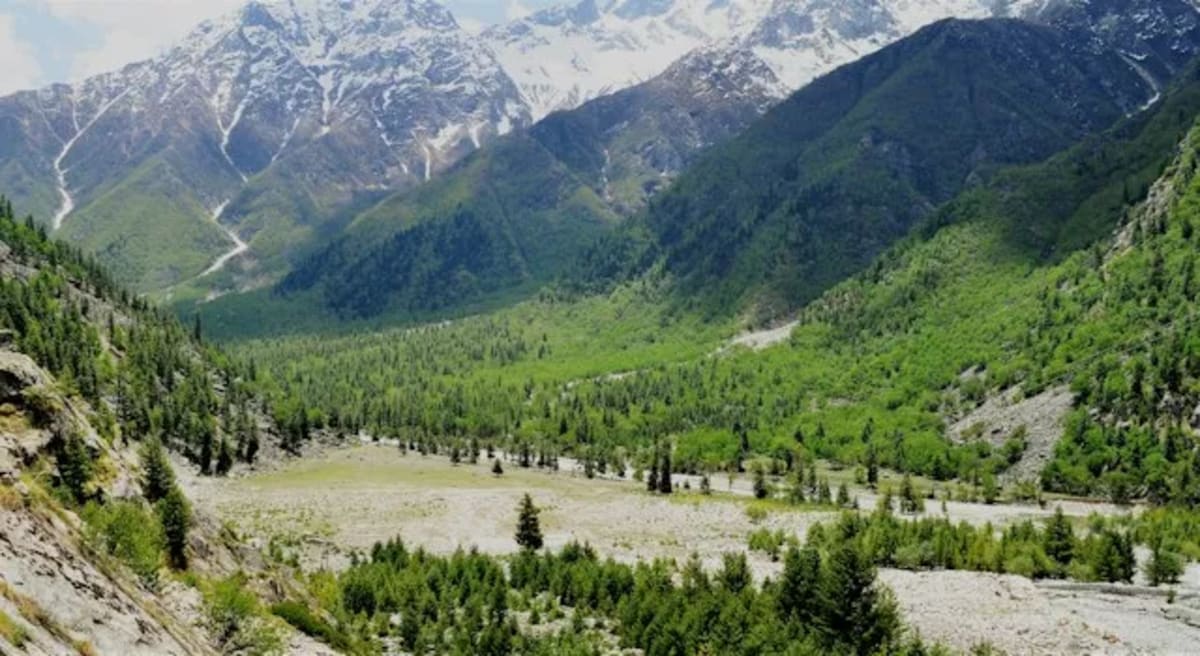
Kinnaur — jahan Kinner Kailash ki chotiyan, apple ke baag aur purani Himachali sanskriti ek saath milte hain. Yeh guide aapko batayega kab jaana, kahan rukna aur kya miss nahi karna.
Kinnaur is one of those parts of Himachal Pradesh where the landscape keeps changing as you travel. One moment you're driving through green valleys and apple orchards, and a few hours later the mountains become dry, rocky and much more dramatic.
Sangla, Chitkul and Kalpa are the places most travellers know, but they are only a small part of Kinnaur. The district is also home to old villages, traditional temples, high-altitude landscapes and routes that continue towards Spiti.
If you're planning your first Kinnaur trip, the biggest mistake is trying to cover everything in a few days. The roads are slow, the distances feel longer than they look on a map, and some of the best parts of the journey are simply the villages, views and stops along the way.
Here's what you should know before planning a trip to Kinnaur.
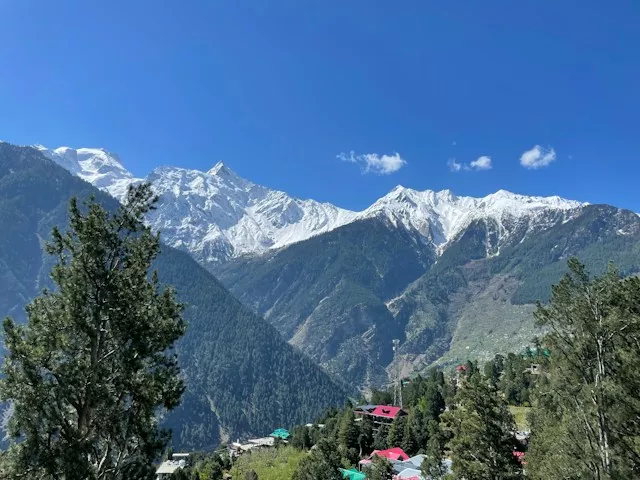
Why Kinnaur Is Different from the Usual Himachal Trip
Kinnaur isn't a single hill station. It is a large Himalayan district with very different landscapes and communities.
Lower parts of the region are greener, with forests, orchards and traditional villages. As you move towards Reckong Peo, Pooh and Nako, the scenery gradually becomes drier and more rugged.
You'll also notice a mix of Hindu and Buddhist influences in the architecture, festivals, temples and everyday life of the region.
That variety is what makes Kinnaur interesting. You can spend one day walking through an apple-growing village and the next day be surrounded by barren mountains that look much closer to Spiti.
Places You Should Include in a Kinnaur Trip
You don't need to visit every village in Kinnaur. For a first trip, these are some of the places that make the most sense.
Kalpa – For Mountain Views and Slow Evenings
Kalpa is one of the easiest places to fall in love with in Kinnaur.
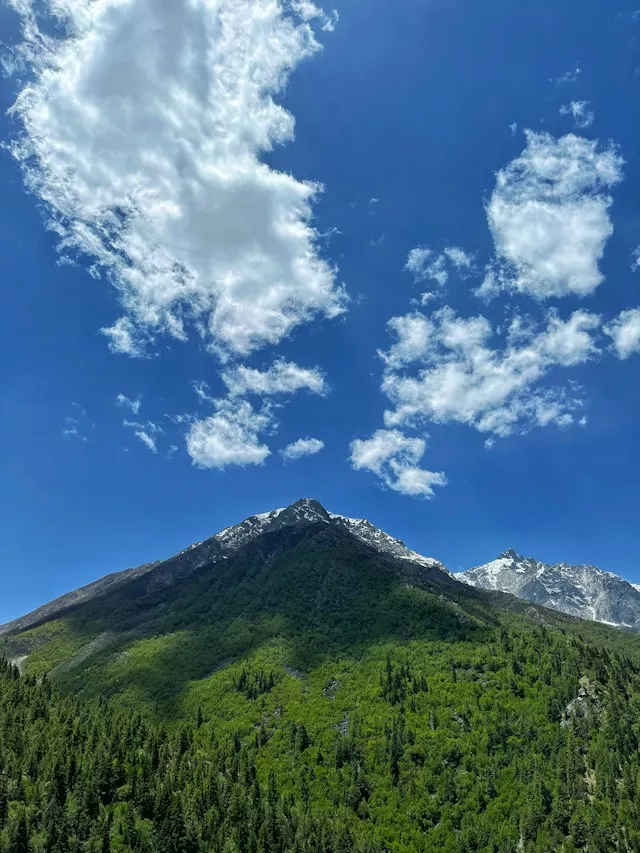
The village sits above Reckong Peo and is known for its views towards the Kinner Kailash range, traditional houses and apple orchards. Early mornings and evenings are particularly beautiful when the mountains change colour with the light.
You can spend your time walking around the village, visiting local temples and exploring nearby Roghi. The Chaka side also offers a popular short hike for travellers who want some time on the trail.
Best for: mountain views, village walks, photography and relaxed stays.
Sangla – The Green Side of Kinnaur
Sangla lies in the Baspa Valley, surrounded by forests, mountains and apple orchards.
Compared with some of the more remote parts of Kinnaur, Sangla has a good choice of stays and is a convenient base for exploring the valley.
Nearby Kamru is one of the most popular places to visit, while Batseri offers a quieter village experience. You can also spend an evening simply walking around the valley instead of filling the day with sightseeing.
Best for: first-time visitors, families, nature lovers and exploring Baspa Valley.
Chitkul – When You Want to Go Further
Chitkul is one of the most recognisable villages in Kinnaur and sits further up the Baspa Valley from Sangla.
The journey itself is part of the experience. The road gets more remote as you move deeper into the valley, while traditional houses, mountains and the Baspa River create a very different atmosphere from the busy hill towns of Himachal.
Don't treat Chitkul only as a photo stop. Give yourself some time to walk around the village and experience the slower pace.
Best for: scenic drives, mountain landscapes, photography and a quieter stay.
Reckong Peo – More Useful Than Scenic
Reckong Peo isn't usually the reason people travel to Kinnaur, but it is an important stop.
It is the administrative centre of the district and a useful place for accommodation, food, transport and other basic requirements. Kalpa is also easily accessible from here.
If you're travelling deeper into Kinnaur, Peo can be a practical place to stop and prepare for the next part of the journey.
Sarahan – A Good Start to the Kinnaur Route
Sarahan is often included on the route from Shimla towards Kinnaur.
The main attraction here is the Bhimakali Temple, known for its distinctive architecture and religious importance. Sarahan also works well as an overnight stop before continuing towards Sangla and the deeper parts of Kinnaur.
Best for: temples, architecture and breaking the journey from Shimla.
Nako – Where Kinnaur Starts Feeling Like Spiti
Nako sits towards the Kinnaur–Spiti side and looks very different from Sangla or Kalpa.
The landscape becomes much drier, traditional houses replace the greener valley scenery and Buddhist influences become more visible.
The Nako Lake and monastery are the main attractions, but the real reason to stop here is the change in landscape and atmosphere.
If your Kinnaur trip continues towards Spiti, Nako makes for a natural stop along the route.
Lesser-Known Routes in Kinnaur: A Slow-Travel Guide
If you have more time, you can move beyond the usual tourist circuit.
Ribba and Rispa
These villages are known for their orchards and traditional Kinnauri surroundings. They offer a slower experience than the more popular tourist bases.
Moorang
Moorang is an interesting stop for travellers who enjoy history and traditional villages. The old fort and surrounding landscape make it different from the usual mountain-view destinations.
Kafnu
Kafnu lies in Bhaba Valley and is particularly interesting for trekkers. It is also associated with the Pin-Bhaba trekking route, which connects towards Spiti.
Charang
Charang is located in the upper Kinnaur region and is closely associated with trekking routes around the Kinner Kailash area. It is better suited to travellers who have more time and are comfortable travelling beyond the regular tourist circuit.
Yulla Kanda
Yulla Kanda is a high-altitude destination reached by trekking. The route is more suitable for travellers looking for a proper mountain experience rather than a quick sightseeing stop.
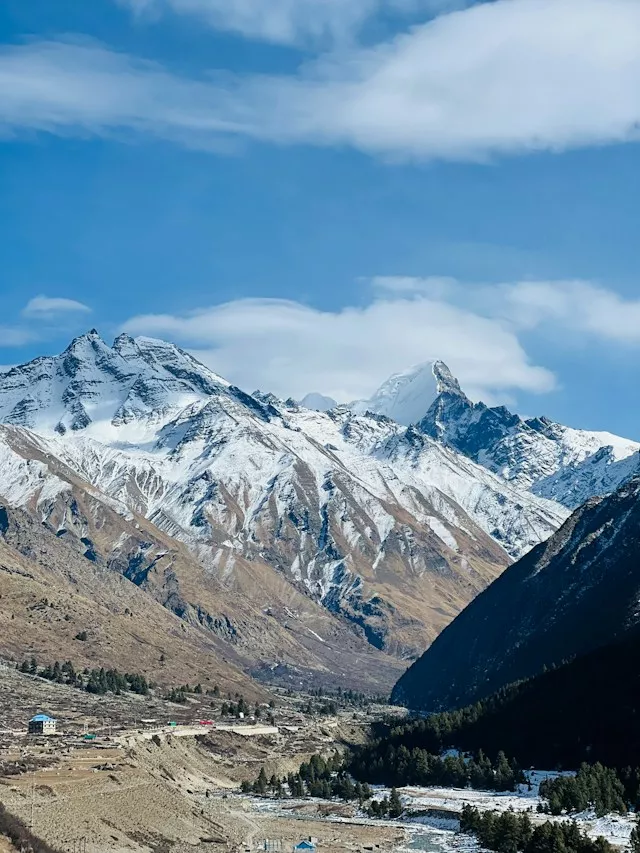
Village Life in Kinnaur: Traditions Still Woven into Everyday Streets
One of the best things about travelling through Kinnaur is that the villages don't all look or feel the same.
Traditional wooden architecture, local temples, monasteries, village festivals and agricultural traditions are still an important part of life here.
You may notice Hindu and Buddhist influences existing alongside each other, particularly as you travel towards the upper parts of the district.
If you're staying in a homestay, take some time to speak with your hosts. You'll often learn more about the region from a conversation over a local meal than from rushing through another sightseeing point.
What to Eat in Kinnaur: Local Dishes and Mountain Flavours
Food in Kinnaur is generally simple, filling and suited to the mountain climate.
Sidu
Sidu is a steamed wheat preparation commonly found across Himachal. Depending on the place, it may be served with ghee, dal, chutney or other local accompaniments.
Kinnauri Rajma
Rajma is common across North India, but the local varieties and preparation can be different. If you're staying in a homestay, try the local version with rice.
Thenthuk and Momos
As you move towards the upper Kinnaur and Spiti side, Tibetan-influenced food becomes more common. Thenthuk, momos and other warming dishes are easy choices during colder days.
Apples and Local Produce
Kinnaur is famous for its apples. Depending on the season, you may also come across walnuts, apricots and other locally grown produce.
For the best local food experience, don't only look for cafés. Homestays and small local eateries can often give you a better idea of what people actually eat in the region.
Treks Around Kinnaur
Kinnaur is not just a road-trip destination. It has several serious trekking routes as well.
Some routes you may come across include:
Kinner Kailash Parikrama
Pin-Bhaba Trek
Rupin Pass
Lamkhaga Pass
Rupi Bhaba Sanctuary routes
The difficulty varies significantly between these routes. High-altitude passes should not be treated like normal day hikes, and weather can change quickly.
If you're planning a serious trek, check current trail conditions, permits and local guidance before leaving.
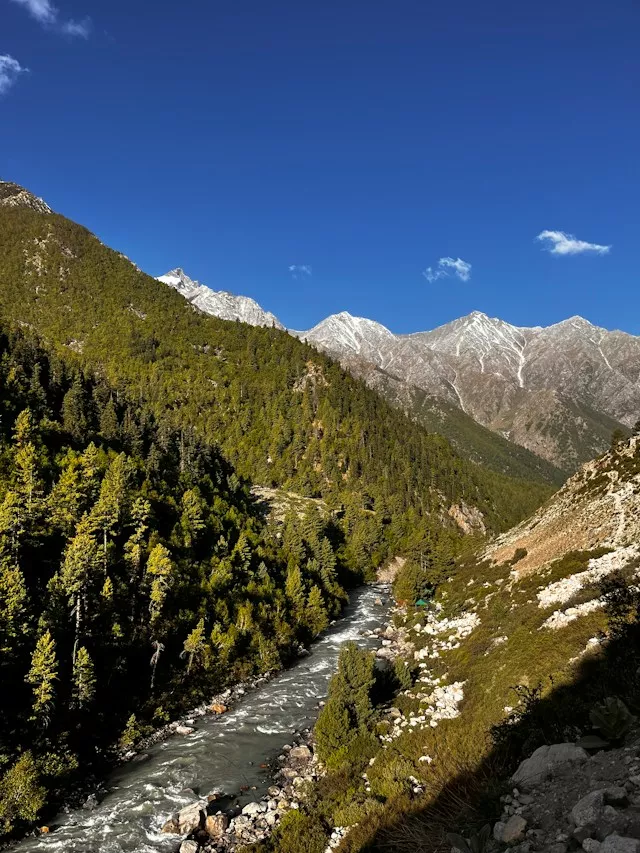
How to Reach Kinnaur
For most travellers, Kinnaur is a road-trip destination.
The common approach from Shimla is:
Shimla → Narkanda → Rampur → Jeori → Tapri → Karcham → Reckong Peo
From Karcham, the road towards Sangla and the Baspa Valley branches off, while the main route continues towards Reckong Peo and upper Kinnaur.
You can travel by bus, shared transport, taxi or private vehicle, depending on your route and budget.
The nearest major railhead is around Kalka, while Shimla has the nearest airport option for travellers arriving by air. In both cases, you'll need to continue by road.
How Many Days Do You Need for Kinnaur?
This depends on how much of the district you want to see.
Trip length | What you can realistically cover |
|---|---|
4–5 days | Sangla, Chitkul and Kalpa |
6–7 days | Sarahan + Sangla + Chitkul + Kalpa |
8–10 days | Add upper Kinnaur or Nako |
10+ days | Explore slower, add offbeat villages or combine with Spiti |
Don't make your itinerary too tight. A delayed road journey can easily change your plans in the mountains.
Kinnaur Trip Budget
Your Kinnaur budget will mainly depend on transport, accommodation, food and the number of days you spend travelling.
A shared trip or group journey can reduce the cost of transport and accommodation per person, while private taxis and premium stays can increase the overall budget considerably.
For a realistic estimate, check current hotel, taxi and bus prices for your travel dates rather than relying on a fixed online number.
Things to Know Before You Travel
Kinnaur is beautiful, but travelling here requires a little more planning than a regular Himachal holiday.
Keep some cash with you. Don't depend entirely on ATMs in remote areas.
Carry basic medicines and essentials because shops become less frequent as you travel deeper into the district.
Keep your itinerary flexible. Road conditions and weather can affect travel plans.
Don't underestimate travel time. Mountain distances take longer than they appear on a map.
Carry layers. Temperatures can change significantly between daytime and night.
Respect local customs. Ask before photographing people, homes or religious places.
Avoid littering. Remote Himalayan areas have limited waste-management facilities.
Check current road conditions before heading towards higher or remote areas.
Kinnaur or Spiti: Which One Should You Choose?
If you're confused between the two, think about the kind of landscape and trip you want.
Kinnaur | Spiti |
|---|---|
Green valleys and orchards | Dry, high-altitude desert |
Sangla, Chitkul and Kalpa | Kaza, Tabo, Langza and Key |
More forested landscapes | More barren mountain scenery |
Traditional villages and orchards | Buddhist villages and monasteries |
Good for a relaxed Himachal road trip | Better suited to a longer high-altitude circuit |
You don't necessarily have to choose between them. Kinnaur is also one of the main gateways for a road journey towards Spiti, so both can be combined into a longer itinerary.
Plan Your Kinnaur Trip with TravelTech
Don't want to figure out every stay, transfer and sightseeing stop yourself?
TravelTech offers group trips and customised Himachal itineraries, including routes covering Kinnaur and nearby destinations.
You can join a group trip if you want to travel with other people, or customise your Kinnaur itinerary around your dates, budget, preferred stays and places you want to explore.
Explore our [Himachal trips], or [customise your Kinnaur trip] with TravelTech.
Final Thoughts
Kinnaur isn't a destination you need to rush through.
The popular places like Sangla, Chitkul and Kalpa are popular for a reason, but the experience becomes more interesting when you leave some space for smaller villages, local food and unplanned stops.
Take the road slowly, keep your itinerary flexible and give yourself enough time to actually experience the region.
You may start the trip for the mountain views, but it's often the villages, roads and small moments between destinations that you'll remember most.
🚗 How to Reach
By Air
The nearest airport is Shimla Airport (Jubbarhatti), but flight options are limited. After reaching Shimla, you need to continue towards Kinnaur by road. For better flight connectivity, Chandigarh Airport is another practical option. From Chandigarh, you can travel to Shimla and then continue towards Kinnaur.
By Train
There is no railway station in Kinnaur. The closest practical railway connections are around Shimla and Kalka. The Kalka–Shimla railway can be an experience in itself, but it is not the fastest way to reach Kinnaur. From Shimla, you will need to continue by road. For travellers coming from major cities, reaching Kalka or Chandigarh by train and then taking a bus or cab towards Shimla and Kinnaur is usually more practical.
By Road
Road is the easiest way to reach Kinnaur. You can travel from Shimla towards Reckong Peo via Narkanda and Rampur by HRTC bus, shared taxi, private cab or your own vehicle. The journey takes time, so keep some extra hours for mountain roads and weather conditions.
728 × 90 — Leaderboard
❓ Frequently Asked Questions
Is Kinnaur worth visiting?
How many days are enough for a Kinnaur trip?
What is the best time to visit Kinnaur?
Is Kinnaur safe for tourists?
What are the best places to visit in Kinnaur?
Is Kinnaur suitable for a first-time mountain traveller?
📚 Related Guides
More Travel Stories
7 Days in Kashmir: More Than a Postcard, A Journey You'll Remember
Kashmir Stranger Group Trip | 7 Days with New Travel Companions
Tirthan Valley Unveiled: A Quiet Escape in Himachal Pradesh
Plan a Tirthan Valley trip with this practical guide covering places to visit, things to do, weather, food, itinerary, costs and travel tips.
Palampur Travel Guide: Tea Gardens, Dhauladhars & Kangra Culture
Planning a Palampur trip? Discover the best places to visit, tea gardens, things to do, travel tips and everything you need to know before you go.